Introduction
If you have ever stood in the craft aisle wondering what is worth your limited time and energy, you are not alone. Between school drop-offs, grocery runs, and the endless laundry pile, the last thing you need is a project that demands more than it gives back to you.
That is why the 2026 craft trends — as predicted by Michaels, the craft retailer that tracks what real makers actually buy — are such good news.
This year's trending projects are less about perfection and more about presence. They reward the process, not the perfectly curated Instagram post.
And most of them require supplies you either already own or can pick up for under twenty dollars.
I have combed through the trend reports, talked to shop owners, and tested several of these projects myself so you can skip the guesswork. Here is what is shaping up to be the biggest craft movement of 2026, and how you can join in without adding stress to your plate.
Punch Needle: The Comeback Nobody Expected
Punch needle embroidery has moved from niche textile art to mainstream craft aisle staple, and for good reason.
Unlike traditional embroidery, which demands precise tension and tiny stitches, punch needle lets you work quickly with a simple tool that punches loops of yarn through fabric.
The result is a plush, textured surface that feels like a cross between rug-making and embroidery.
Michaels reports that punch needle kits have been flying off shelves since late 2025, driven largely by moms who love the meditative rhythm of the work.
"You can literally do it while watching your kids play or listening to a podcast," one craft store manager told me.
"It is almost impossible to mess up."
Beginners can start with a pre-printed monk's cloth pattern from a kit that includes the punch needle tool, yarn, and hoop.
A simple coaster or wall hanging can be completed in an evening. For those ready to design their own pieces, blank monk's cloth and a basic punch needle tool cost under fifteen dollars and open up endless possibilities.
What You Need to Start Punch Needle
- A punch needle tool (adjustable depth is ideal)
- Monk's cloth or weavers cloth — this is the special fabric that holds the loops
- A wooden or plastic hoop to keep fabric taut
- Worsted-weight yarn in your favorite colors
- Scissors and a yarn needle for finishing edges
A full beginner kit runs between eighteen and thirty dollars at most craft stores. The first project — usually a small wall hanging or coaster — takes two to three hours.
After that, you will find yourself reaching for the punch needle whenever you need a calm, hands-on activity that still lets your mind wander.
Junk Journaling: Turning Scraps into Treasure
If you have a drawer full of ticket stubs, handwritten notes, or old maps you cannot bring yourself to throw away, junk journaling is the creative outlet you did not know you needed.
Unlike a traditional scrapbook, which aims for polished layouts and coordinated colors, a junk journal celebrates imperfection.
Layers of paper, stitching, found objects, and handwritten text combine into something that feels alive and personal.
Michaels has expanded its paper crafting section significantly to meet demand, adding specialty papers, stencil sets, and bookbinding supplies.
The beauty of junk journaling is that it costs almost nothing to start. A composition notebook, a glue stick, and whatever paper scraps you have around are enough for your first spread.
What makes this trend especially suited to busy moms is its flexibility. You can work on a single page for ten minutes or an hour.
There is no wrong way to do it. Many junk journalers describe the process as "visual journaling" — a way to process emotions, document memories, and play with color and texture without the pressure of creating something Pinterest-worthy.
A Simple First Spread Idea
Open your journal to a two-page spread. On the left, glue down a envelope from a piece of mail you received this week.
Tuck a small note or receipt inside it. On the right, layer a map or printed paper, then add a few words in marker — a favorite line from a book, a memory from the day, or simply the date.
Add a stitch of thread through the centerfold if you are feeling adventurous. Done. That is junk journaling.
Latch Hook: Making a Genuine Return
The latch hook rug kit — a staple of 1970s craft rooms — is experiencing a resurgence that has taken even industry insiders by surprise.
Michaels reports that latch hook sales more than doubled between 2024 and 2025, driven by a new generation of crafters who appreciate the slow, repetitive nature of the work.
Modern latch hook kits look nothing like your grandmother's. Designs range from abstract geometric patterns to pop culture motifs and nature scenes.
The technique is remarkably simple: you thread precut yarn pieces onto a canvas grid using a latch hook tool, then trim and fluff the finished piece.
A 12-by-12-inch wall hanging takes roughly six to eight hours and costs about twenty-five dollars in materials.
The satisfaction factor is extremely high. Each loop you pull through creates an immediate, visible result, which makes it easier to stay motivated than with projects that require days of work before you see progress.
It is also wonderfully portable — everything fits in a small bag you can take to soccer practice or on a road trip.
Visible Mending: Beautiful Repairs with Meaning
Visible mending — the practice of repairing clothes in a way that highlights rather than hides the repair — has graduated from a sustainability niche to a full-blown craft category. Michaels now carries dedicated darning looms, sashiko thread sets, and embroidery patches designed specifically for mending.
This trend resonates deeply with the SAHM audience for practical reasons. Kids' jeans develop holes. Favorite sweaters get snagged. A shirt collar wears thin. Instead of tossing these items or relegating them to the rag bag, visible mending turns each repair into a small piece of wearable art.
The most beginner-friendly technique is the Japanese art of sashiko — a running stitch worked in geometric patterns that strengthens fabric while adding beauty.
White thread on indigo fabric is the classic pairing, but you can use any thread color that makes you smile.
A basic sashiko kit with thread, needle, and practice fabric costs about twelve dollars.
Getting Started with Sashiko Mending
- Choose an item that needs repair — denim knees, cotton elbows, or linen napkins are ideal.
- Place a patch behind the hole. Iron-on patches work well, or use fusible interfacing.
- Draw a simple grid or geometric pattern around the area with a fabric marker.
- Thread a sashiko needle (it has a large eye) and stitch along your lines, keeping stitches even.
- Work from the center outward. The patch underneath catches the thread and reinforces the repair.
Within an hour, you will have turned a hole into a conversation piece. Your kids will love showing off their "special" patched jeans with the cool stitching.
Bead Weaving and Jewelry Making
Michaels has identified bead crafts as one of the fastest-growing categories entering 2026, with particular momentum in bead weaving — a technique that uses tiny seed beads and a needle and thread to create intricate patterns.
The trend is driven partly by social media (bead weaving videos are deeply satisfying to watch) and partly by the desire for handmade jewelry that expresses personal style rather than fast-fashion uniformity.
Unlike stringing beads onto elastic cord — which is quick but limited in design — bead weaving allows you to create fabric-like surfaces from beads. You can make earrings, bracelets, necklaces, and even small decorative objects like beaded pouches.
A bead weaving starter kit with seed beads, thread, needles, and a pattern costs around twenty dollars. The first project — a simple peyote stitch bracelet — takes about two hours and teaches you the foundational technique. From there, you can explore brick stitch, herringbone, and right-angle weave.
Clay Crafting: Polymer and Air-Dry Projects
Working with clay has become one of the most accessible craft trends of 2026, thanks to the widespread availability of air-dry clay that requires no kiln or oven.
Michaels reports that their clay and sculpting tool sales have grown steadily, with polymer clay remaining the top seller for jewelry and small decorative objects.
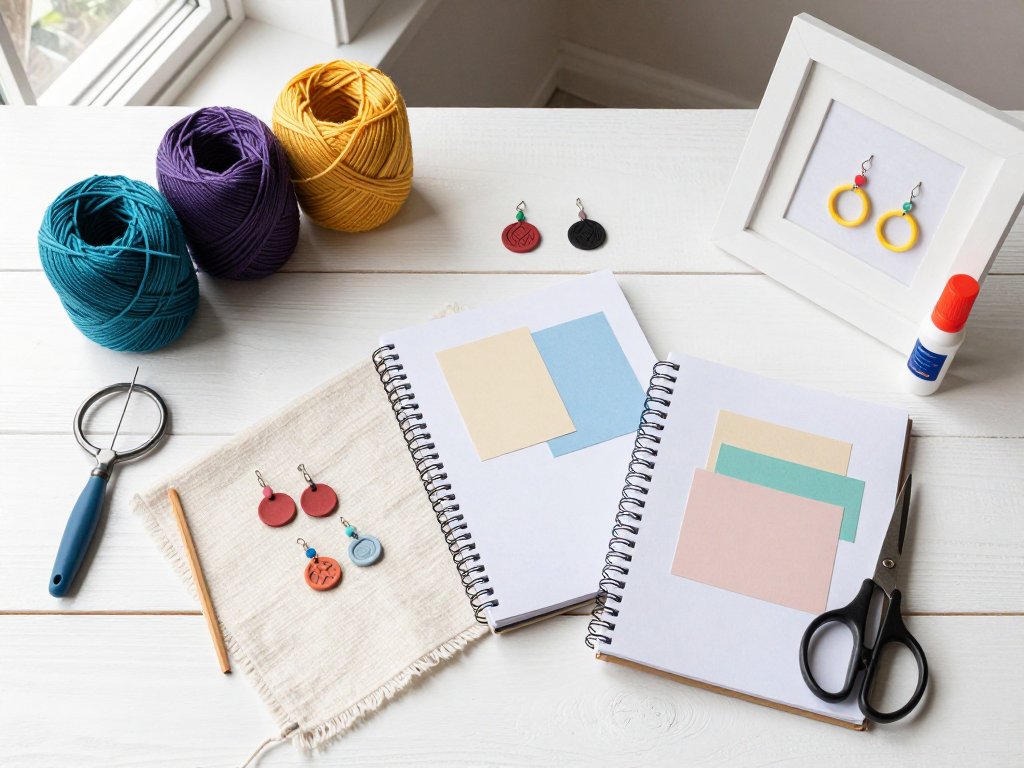
The appeal is obvious: clay is forgiving. If you do not like what you have made, you roll it into a ball and start over. No wasted materials, no frustration. Projects range from earrings and pendant necklaces to small bowls, trinket dishes, and plant pot decorations.
For beginners, air-dry clay is the gentlest introduction. It stays workable for hours, dries overnight, and can be painted with acrylic paint once fully cured.
Polymer clay, which requires baking in a home oven, offers more durability and a wider color range, making it ideal for jewelry that gets daily wear.
Five-Minute Clay Earrings
- Roll a small ball of polymer clay, about the size of a blueberry.
- Flatten it slightly between your palms, then shape it into an oval or teardrop.
- Use a toothpick to create a hole near the top for the earring finding.
- Bake according to package instructions (typically 275°F for 15 minutes).
- Once cool, attach earring wires or posts and wear them out the same day.
A pack of polymer clay in six colors costs about twelve dollars and will make dozens of pairs of earrings — perfect for gifts or a personal accessory collection that changes with your mood.
Paper Flowers That Last Forever
Fresh flowers are lovely, but they wilt. Paper flowers — made from crepe paper, cardstock, or book pages — offer the same visual joy without the five-day expiration date.
Michaels has reported a surge in paper flower supplies, with crepe paper streamers and floral wire being the top-selling items in the paper crafts aisle.
The trend is closely tied to the broader interest in slow, meditative crafts. Cutting, shaping, and assembling paper petals requires focus and patience, and the result is a permanent bouquet that will never need watering.
Paper flowers are also deeply budget-friendly: a single roll of crepe paper and a spool of floral wire can produce an entire garden of blooms for under ten dollars.
Beginners should start with simple roses or daisies, which require only a few petal shapes and basic assembly. Tutorials on the Michaels website walk you through each step. Once you master the basic technique, you can move on to more intricate flowers like peonies, tulips, and ranunculus.
How to Choose Your 2026 Trend Project
With so many exciting options, deciding where to start can feel overwhelming. Here is how I recommend narrowing it down based on what you need right now:
- Need something calming? Punch needle or latch hook — both are repetitive, meditative, and produce quick results.
- Want to use what you already have? Junk journaling requires almost no special supplies and turns your collected scraps into art.
- Love the idea of wearable art? Bead weaving or polymer clay earrings let you create accessories that start conversations.
- Worried about waste? Visible mending extends the life of your family's clothes while adding beauty.
- Want a project that lasts? Paper flowers create permanent decor that brightens any room.
Conclusion
The most encouraging thing about 2026's craft trends is that none of them demand mastery. They welcome you exactly where you are — with ten minutes or two hours, with a single skein of yarn or a pile of saved papers, with perfect stitches or delightfully uneven ones.
Michaels has stocked their shelves with the supplies for each of these trends, but the real investment is not in materials.
It is in giving yourself permission to create without pressure. Choose one trend from this list, pick up the basic supplies, and set aside one evening this week to try it.
Not for Instagram. Not for perfection. Just for the quiet joy of making something with your hands.
That is what crafting in 2026 is really about — showing up, making something with your hands, and letting go of the idea that it needs to be perfect.
Choose one trend from this list. Gather the simplest version of the supplies. Give yourself one evening. You might be surprised by how good it feels to just make something again.