Candle Wax Calculator — How Much Wax Do You Actually Need?
Every candle maker has a "three times too much wax" story. Here's mine — and the calculator I built so it never happens again.
I was making jar candles for a holiday market. Eight mason jars lined up, wax melting, fragrance measured. I poured the first jar, then the second. By the sixth jar, the pour pot was still half full. I had made nearly three times the wax I needed. That's a lot of wasted soy wax and a lot of cash cooling into a block I'd never use.
The problem? I eyeballed the volume, guessed at the density, forgot fragrance oil takes up space, and never actually did the math. So I built the Candle Wax Calculator so we — never have to guess again.
When You Should Reach for This Calculator
One candle for your kitchen table? Eyeball it. But the moment you cross into multiples — holiday gifts, an Etsy launch, twelve identical jars for a wedding — the margin for error compounds. One bad calculation times twelve jars means real waste.
Use the calculator for any new container size, a different wax type, or any batch where wasted material would actually sting your wallet.
The Math You're Actually Doing
Your candle jar is a cylinder. Volume is πr²h (pi times radius squared times height). Measure the jar's interior dimensions, not the exterior. The outside is bigger than the inside. I measured the exterior for months before realizing every number was wrong.
Radius is half the diameter. A 3-inch wide jar has a 1.5-inch radius. Square that (2.25), multiply by π (3.14), multiply by interior height. A 3-inch jar with 4 inches of interior height gives roughly 28.3 cubic inches. That's your starting point.
Why Different Waxes Weigh Different Amounts
Cubic inches don't directly translate to grams or ounces — it depends on wax density:
- Soy wax — roughly 0.9 g/cm³. Lighter and fluffier. Fewer candles per pound.
- Paraffin wax — similar density range but can vary by blend.
- Beeswax — roughly 0.96–1.0 g/cm³. Noticeably heavier. Same volume costs more.
The Candle Wax Calculator handles these conversions automatically. Pick your wax, and it applies the right density factor. No memorizing conversion tables.
Fragrance Load — The Percent That Changes Everything
Fragrance oil displaces wax. At 8% fragrance load, you're replacing 8% of your wax volume with oil. The default of 8% is a solid starting point, but here's the range:
- 5–6% — subtle scent
- 7–9% — standard, what most commercial candles use
- 10–12% — strong throw, common in market candles
Every wax has a maximum fragrance load. Soy tops out around 10–12% before it starts sweating oil (that oily film customers notice). Paraffin can handle higher loads. Beeswax has a naturally strong scent, so you might use less.
The formula: total candle weight × (fragrance % ÷ 100) = fragrance oil weight. The rest is wax. The Candle Wax Calculator shows both numbers.
The 15% Buffer — Why It's Not Optional
I added this after too many "almost perfect" pours that came up a quarter-inch short. Wax sticks to everything — your pour pot, stirring spoon, melting pitcher, that one jar you tipped over. The 15% buffer isn't padding. Here's where that extra goes:
- Pour pot loss — 3–5% stays coated inside your melting vessel
- Stirring tools — wax clings to whisk, spoon, spatula
- Burn-off — small amounts evaporate during melting
- Oopsies — tipped jars, overpours, unnoticed cracks
Skip the 15% buffer and you will eventually come up short. Emergency single-jar batches take as long as full ones. The buffer means you always have a little left over — and leftover wax becomes test candles or wax melts. Never stretch your batch. Always round up.
How to Use the Candle Wax Calculator Like a Pro
This calculator has four inputs, and each one changes your result. Here is what you need to know for each field to get accurate numbers the first time.
- Jar Diameter and Height — Measure the interior of your jar: the inside diameter at the widest point and the height from the bottom to your intended wax line (about half an inch below the rim). Measuring the exterior adds false volume. A ruler with 1/16-inch marks is sufficient; digital calipers are nicer but not required.
- Wax Type — Soy, paraffin, and beeswax all have different densities. Soy wax is the most common for container candles — it is forgiving, has good scent throw, and cleans up with soap and water. Paraffin holds more fragrance. Beeswax is denser and naturally scented. The calculator adjusts the density factor automatically for whichever type you select.
- Fragrance Load — This percentage determines how much fragrance oil to add. Start at 8%, which is the sweet spot for most commercial waxes. 6% gives a subtle scent; 10% gives a strong hot throw. Each wax has a maximum load — soy usually tops out around 10-12%. Going over causes fragrance oil to sweat out of the cured candle, leaving oily spots on the surface.
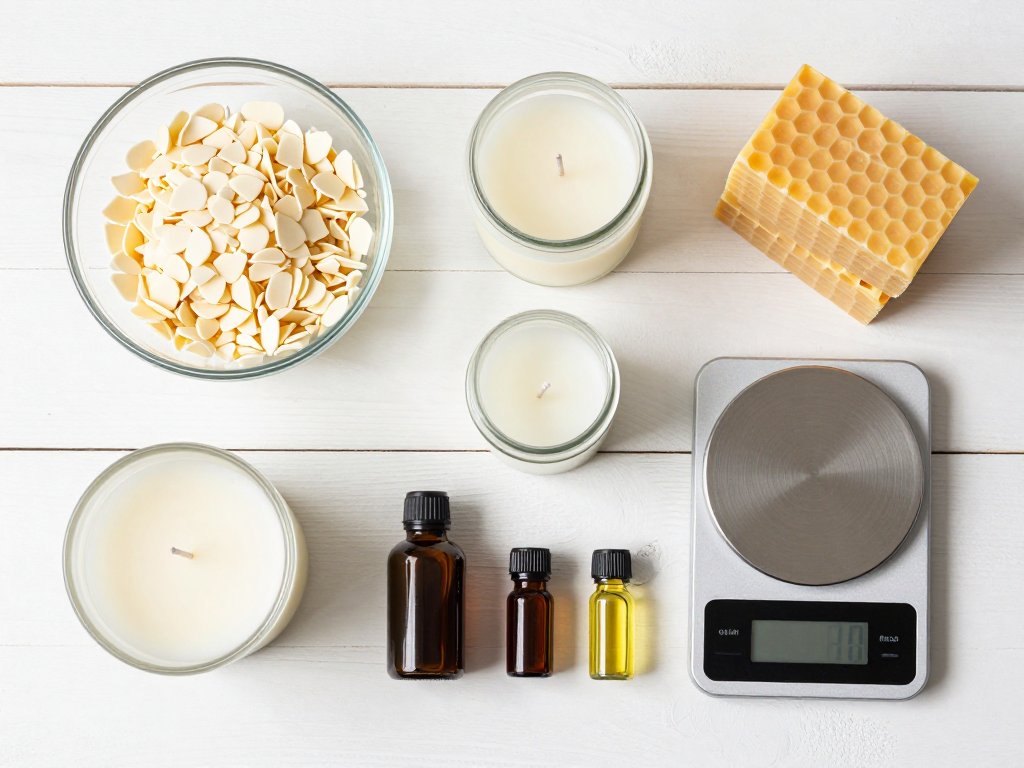
- Calculate — The button returns total wax weight and total fragrance oil weight, with the 15% buffer already included. Weigh your wax on a kitchen scale — do not use volume measurements with flakes or pellets, they are aerated and inaccurate. Weigh fragrance oil separately. Combine at the correct temperature for your wax type.
Pro tip for production runs: If you are making 12 identical jars for a market, calculate one jar first. Multiply the wax and fragrance results by 12. The 15% buffer stays per-jar because it covers pour pot loss and stir stick coating on each batch, not just the first one. This gives you an accurate total material cost for pricing your candles.
Open the Candle Wax Calculator and run your numbers. After two or three batches you will start to estimate by instinct, but the calculator will still save you from the occasional "three times too much wax" mistake.
From One Maker to Another
I co-created the Candle Wax Calculator because candle making should be about the craft — scent blending, color matching, that perfectly smooth top — not the anxiety of guessing how much wax to buy. Every gram saved on accurate measurement is a gram for better fragrance oils, nicer jars, or more test batches.
If you're selling on Etsy or at markets, accurate material tracking improves your margins. Know exactly what each candle costs, and price with confidence. The calculator turns guesswork into a line item in your budget.
So next time you're lining up jars on your workbench, do the math before you melt. Your wallet — and your future self, who won't be scraping wasted wax out of a pour pot — will thank you.
— Mason Reed