Introduction
Every August, I stand in the school-supply aisle with the same question: what do you give the person who will spend more waking hours with your child than you will this year?
A teacher. And not just any teacher — the one who will learn the shape of your child's laugh, who will celebrate wobbly first sentences and gently redirect the wiggles.
Store-bought mugs and gift cards are lovely, truly. But there is something about a gift made at the kitchen table, with your own two hands, that says what a receipt never can: we see you, and we are grateful.
This guide is for busy parents who want to say thank you personally, without adding a stressful project to an already full week.
Every idea here is simple, most cost under five dollars, and all can be finished in one evening — often with the kids underfoot, which is part of the charm.
Why Handmade Gifts Mean So Much to Teachers
Teachers are human. They have coffee cups that multiply, tote bags full of graded papers, and a drawer of apple-themed knickknacks that would make a gift shop weep. What they don't have is much time to themselves — or much evidence that their daily, invisible work landed.
A handmade gift tells them it did.
When you make something by hand, you are saying three things at once:
- I thought about you outside of school hours.
- I see you as a person, not just a job title.
- I gave you my time, which is the one thing none of us have enough of.
Teachers have told me, again and again, that the gifts they keep are not the expensive ones.
They keep the slightly crooked clay pinch pot, the card with the wobbly letters, the jar of notes a seven-year-old dictated with great seriousness.
Those are the gifts that end up on the windowsill, years later, dusted off and remembered.
And here is the quiet truth: handmade doesn't have to mean perfect. In fact, the imperfect ones are usually the ones that matter most.
Eight Simple Gifts to Make This Week
Pick one. That's it. You don't need to make all eight, and you don't need to make the "best" one. Skim the list, find the project that makes you nod instead of sigh, and start there.
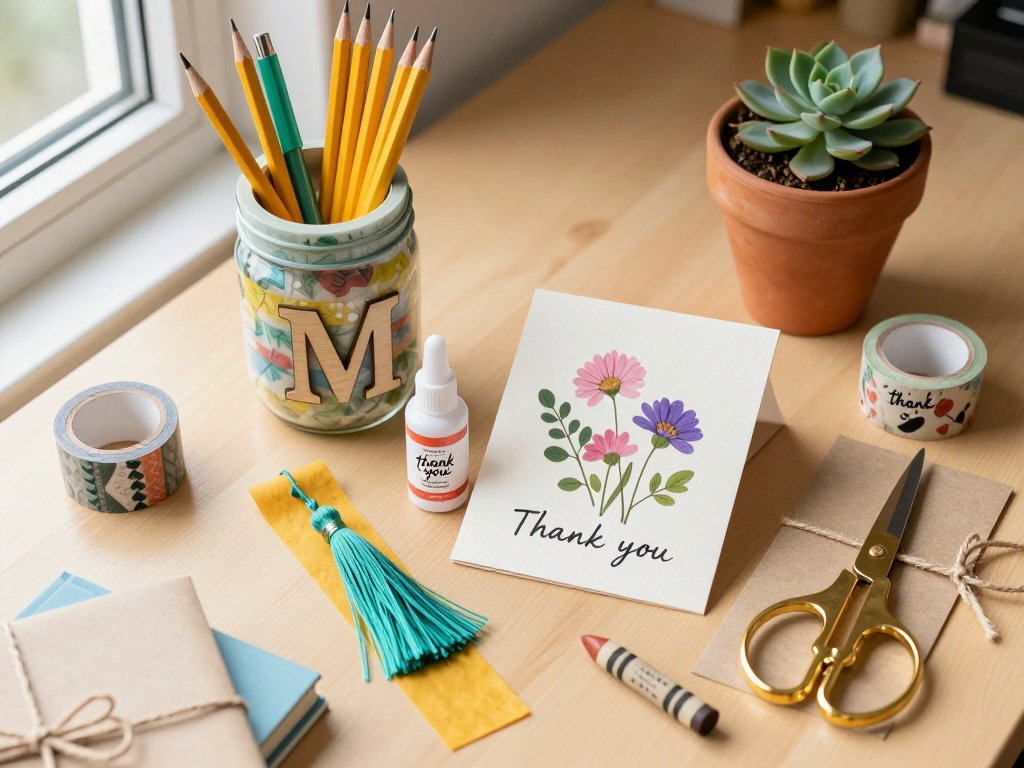
The Mason Jar Pencil Holder
Every teacher's desk is a pencil graveyard. Fix that with a jar that holds their favorites.
Supplies:
- Clean mason jar, or a recycled pasta sauce jar
- Washi tape in two or three colors
- Cardstock or a wooden letter for the teacher's initial
- Glue or double-sided tape
Steps:
- Wash the jar and let it dry completely.
- Wrap strips of washi tape around the jar, overlapping them however feels right. Wabi-sabi is a feature here, not a bug.
- Cut the teacher's initial from cardstock — or use a wooden letter from the craft store — and attach it near the top.
- Fill with a few new pencils and maybe a fresh pack of their favorite stickers.
That's it. Fifteen minutes, start to finish.
A Thank-You Card with a Little Piece of Summer
The card is the gift that keeps giving — it costs almost nothing and takes almost no time.
Supplies:
- Blank card and envelope, or cardstock folded in half
- Pressed flowers — flatten a few from the garden between book pages for a week, or buy a pack
- Glue stick
- Watercolor paints or colored pencils, if you want a soft wash background
Steps:
- If you're painting, do a loose wash of color first and let it dry.
- Arrange the flowers in a small cluster and glue them down.
- Write a short note inside — more on that later, because the note matters more than the card.
- Let your child sign their name, even if it's a scribble. Especially if it's a scribble.
The Apple Tea Towel or Tote
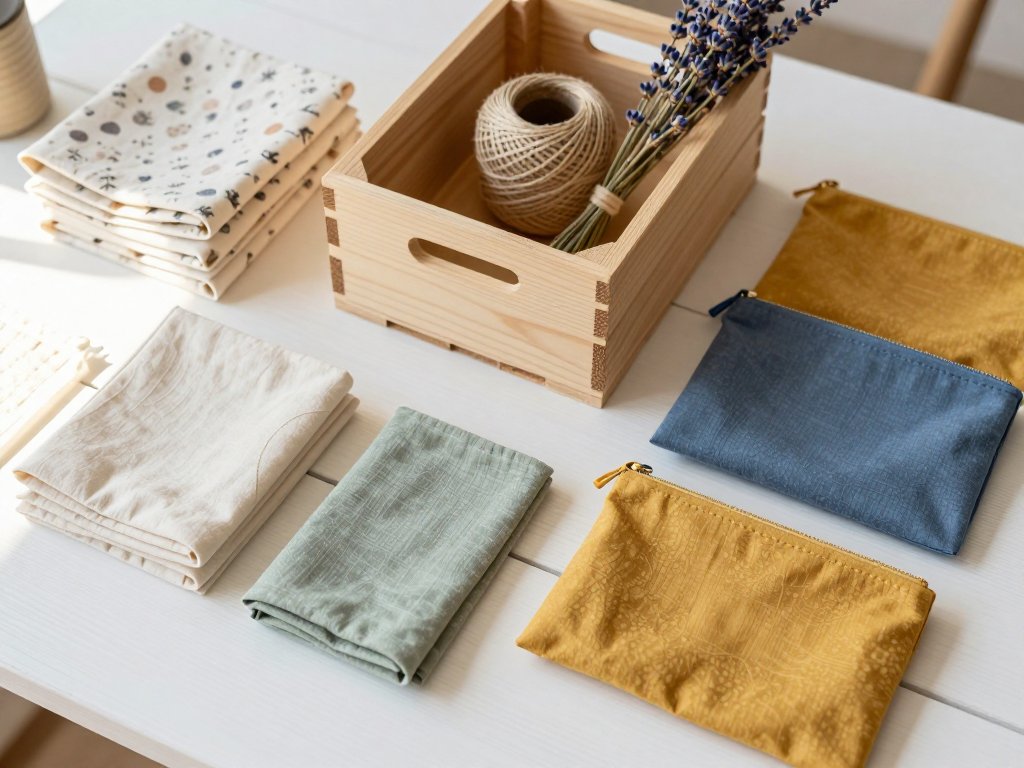
A tea towel is the workhorse of the teacher gift world. It gets used daily, it's useful, and it takes paint beautifully.
Supplies:
- Plain cotton tea towel or canvas tote
- Fabric paint in red and green, or any colors you like
- Cardboard to slide inside so the paint doesn't bleed through
- A simple apple shape cut from a potato, a stencil, or a steady hand
Steps:
- Slide the cardboard inside the towel or tote.
- Stamp or paint an apple — a circle with a stem and a leaf is all it takes. If it looks more like a tomato, congratulations, you've made a tomato, and tomatoes are lovely too.
- Let the paint dry overnight, then heat-set with an iron according to the paint package directions.
- Iron-on vinyl is the no-paint alternative: cut an apple or initial with scissors, press it on with a household iron, and you're done.
The Gratitude Jar
This one takes five minutes to assemble and keeps giving all year long.
Supplies:
- Small jar with a lid
- Strips of pretty paper
- A pen
Steps:
- Cut the paper into strips, about an inch wide.
- Write one note per strip: "Thank you for making reading fun," "Thank you for being patient," "Thank you for liking my dinosaur drawing."
- Roll or fold the strips and drop them in the jar.
- Add a label that says "Open when you need a reminder."
Your child can dictate the notes — their exact words are the best part. Teachers pull these out on hard days, and that's exactly when they need them.
Tassel Bookmarks
Books and teachers go together like glue sticks and glitter. A bookmark is small, personal, and ridiculously easy.
Supplies:
- Cardstock or scrapbook paper
- Hole punch
- Embroidery floss or yarn for the tassel
- Scissors
Steps:
- Cut the cardstock into a rectangle, about two by six inches.
- Round the corners with scissors if you're feeling fancy.
- Punch a hole near the top.
- Make a tassel: wrap the floss around your fingers ten times, tie it at the top, snip the bottom loops, and thread it through the hole.
Five minutes each. Make three, in case one gets lost in the endless book bag abyss.
A Little Pot of Green
A plant is the gift that says "I hope you get a quiet moment to breathe." A small succulent or a pot of herbs — rosemary, basil, mint — fits on a classroom windowsill and asks for very little.
Supplies:
- Small pot with drainage, or a recycled mug
- Potting soil and a small succulent or herb seedling
- A smooth rock and acrylic paint, or a wooden plant stake
Steps:
- Plant the succulent or herb and water it lightly.
- Paint a small rock with "thank you" or a heart — or write on a wooden stake with a permanent marker.
- Tuck the rock or stake into the soil.
If the classroom is dark, herbs will sulk. A succulent or a sturdy pothos cutting is more forgiving — matching the plant to the room matters more than matching it to Pinterest.
Homemade Cider or Cocoa Mix in a Jar
Food gifts are cozy, but they come with rules — check the classroom-safe section below first.
Supplies:
- Clean jar with a lid
- Cocoa powder, sugar, and mini marshmallows or chocolate chips, or apple cider concentrate with spices
- A ribbon and a gift tag
Steps (cocoa):
- Layer the cocoa powder, sugar, and marshmallows or chocolate chips in the jar, alternating colors.
- Tie a ribbon around the lid.
- Write brewing instructions on the tag: "Add 2 tablespoons to a mug of hot milk. Stir. Enjoy."
The layered look is the whole trick, and it's basically foolproof — even if the layers blur together, it still tastes like a hug.
Framed Fingerprint Art
This is the one that makes teachers cry. Fair warning.
Supplies:
- A frame — dollar stores have plain ones
- Cardstock
- Washable ink pad
- Fine-tipped marker
Steps:
- Have each child press a thumb or finger onto the ink pad, then onto the cardstock.
- With the marker, turn each fingerprint into something small: a bee, a flower, a balloon, a heart. One line for a stem, two dots for eyes — that's the whole technique.
- Write "Thank you for helping us grow" and the year at the bottom.
- Frame it.
You can do this with one child or a whole class, and the results are always, reliably, adorable.
Getting the Kids Involved (Without Losing Your Mind)
Handmade gifts are better when little hands help, even when little hands make a bigger mess. That mess is the point.
Ways to include kids at every age:
- Toddlers: a handprint on the card, a sticker on the jar, a rock "painted" with a single dab of color.
- Preschoolers: scribble signatures, choosing the washi tape colors, pressing the stamp onto the tea towel.
- School-age kids: dictated thank-you notes, fingerprint art, tying the ribbon, writing the gift tag in their best handwriting.
- Teens: honestly, they're better at this than we are. Let them run the whole project.
A few ground rules to keep it fun: cover the table with newspaper, keep the paint to washable varieties, and let go of the idea that the gift will look like the photo.
Handprint smudges and wobbly letters are the proof that a real child made this, and that's the whole point.
Classroom-Safe Gift Rules
Before you make anything edible or scented, pause. Classrooms are full of allergies, and a thoughtful gift that causes a reaction is a gift gone wrong.
The basic rules:
- No nuts. Ever. Assume nut allergies and skip anything with nuts, even if the teacher has never mentioned them.
- No scented products — no candles, no lotions, no perfumed anything. Many classrooms are scent-free zones, and strong smells can trigger asthma.
- Ask before sending food. Some classrooms ban all food gifts. When in doubt, a card or a plant is always safe.
- Skip latex balloons and anything with small parts that could end up in a younger sibling's mouth.
When you're not sure, the safest gifts are paper, plants, and heartfelt words. They're also, conveniently, the ones teachers tend to love most.
Budget Notes
Here's what makes this list feel doable: almost every project costs under five dollars, and several cost under one.
- Mason jar holder: free if you recycle a pasta sauce jar; a few dollars for washi tape.
- Card with pressed flowers: under a dollar if you press your own flowers.
- Tea towel: two to three dollars for a plain cotton one.
- Gratitude jar: free, if you raid the recycling bin and the junk drawer.
- Bookmarks: pennies, if you have cardstock and floss.
- Plant: three to five dollars for a small succulent.
- Cocoa jar: three to four dollars, ingredients included.
- Fingerprint art: the frame is the only real cost, and dollar stores have them.
If you want to add something store-bought, a gift card tucked into a handmade card keeps the personal touch. Handmade and practical make excellent partners.
When to Give: Timing That Feels Right
There is no wrong time to thank a teacher, but certain moments feel especially natural.
- Start of the year: a small "welcome" gift sets a warm tone. A pencil holder, a bookmark, or a little plant says, "We're glad you're here."
- Teacher appreciation week: usually the first full week of May, but check your school's calendar. This is the moment for the gratitude jar and the fingerprint art.
- End of the year: the classic thank-you moment, especially for the teacher who got your child through a hard year. The framed art shines here.
- Any random Tuesday: honestly, some of the best gifts are the ones that arrive with no occasion at all.
If you're making gifts for several teachers — and some families have three or four — pick one project and replicate it. Same materials, same steps, different initials. Done is better than elaborate.
Wrapping It Up: Simple Presentation
Presentation matters, but simple presentation matters most. Teachers carry armloads of gifts home; they do not need a gift bag the size of a laundry basket.
Easy, pretty options:
- Brown kraft paper or paper grocery bags cut to size, tied with twine.
- A plain gift bag with a sprig of dried lavender or a leaf tucked under the ribbon.
- Handmade gift tags from cardstock scraps — a punched hole and a piece of twine is all it takes.
- A ribbon in the teacher's favorite color, if you know it, or the school colors if you don't.
Write the teacher's name on the tag in your child's handwriting. It's a small detail, and it makes the gift feel like it was made for one specific person — because it was.
The Note That Counts
Everything above is optional. This is not.
The single most meaningful part of any teacher gift is the note. Teachers keep the notes. They read them on hard days. A sincere handwritten note is the real gift; everything else is the wrapping.
What to write, if words feel hard:
- Start with one specific thing: "Thank you for helping Sam fall in love with reading."
- Name a moment you witnessed, even a small one.
- Say what the year meant to your family.
- Close with a simple "Thank you, from our family to yours."
Three sentences is plenty. Two is fine. One, even. What matters is that it's specific, sincere, and from the heart — and that it's handwritten, not typed, not printed, not emailed.
Common Pitfalls (and How to Avoid Them)
Let me save you the mistakes I've made, so you don't have to make them yourself.
- The gift that's too big for the classroom. Teachers don't have shelf space for a three-foot arrangement. Small and useful wins.
- Food without checking allergies. When in doubt, don't send food.
- Overthinking it. The gift doesn't need to be perfect or Pinterest-worthy. It needs to be made with care.
- Waiting until the night before. A little planning means you can enjoy the making instead of racing through it.
- Forgetting the note. The note is the gift. Everything else is a bonus.
- Making the kids sit still. They won't, and they shouldn't. Let the project be a little messy and a lot of fun.
- Comparing yourself to the other parents. There will always be someone who makes a twelve-layer gift basket. That is not a competition you need to enter.
Keep it simple. Keep it sincere. Keep it small. That's the whole recipe.
A Final Word
Teachers don't need more things. They need to know that what they do matters — that someone noticed the extra hour, the patient re-explanation, the moment they chose kindness over curriculum.
You can give them that with a jar, a card, and a note written at the kitchen table, with flour on the counter and a child's handprint drying on the edge of the table.
Make something small. Write something true. Give it with both hands and a smile. That is the whole of it, and it is more than enough.