Introduction
If you've noticed your social media feed shifting from perfectly curated selfies to close-ups of lopsided pottery bowls, half-finished embroidery hoops, and yarn-covered coffee tables, you're not imagining things. A quiet revolution is underway — and it involves less scrolling and more creating.
It's called hobby-maxxing, and it's the 2026 trend that has people everywhere trading passive consumption for active, hands-on creativity.
Whether it's crocheting a slightly wonky scarf, pressing flowers between the pages of a junk journal, or learning to throw clay on a wheel, the message is the same: making something with your own hands feels good, and you don't have to be good at it to start.
As a busy mom of two who only recently picked up a pair of knitting needles for the first time in fifteen years, I can tell you this much: the hobby-maxxing trend isn't about perfection.
It's about presence. And in a world that constantly demands our attention, that makes all the difference.
What Exactly Is Hobby-Maxxing?
Hobby-maxxing is a term that emerged from online communities — particularly on TikTok and Reddit — to describe the intentional practice of taking up hands-on hobbies as a serious part of your lifestyle.
Think of it as the opposite of hustle culture. Instead of optimizing your free time for productivity, side hustles, or career advancement, hobby-maxxing encourages you to do something simply because you enjoy it.
The "maxxing" part of the name comes from internet slang meaning to optimize or maximize a particular area of life.
But here, the optimization isn't about output — it's about fulfillment. Hobby-maxxers aren't trying to sell their creations on Etsy (though some do).
They're trying to reclaim a piece of their day for something tangible, screen-free, and personally meaningful.
For me, it started with a skein of lavender yarn and a YouTube tutorial titled "How to Knit for Absolute Dummies Who Have No Idea What They're Doing." The first row took me twenty-three minutes and looked like a disaster.
But that feeling — of creating something from nothing, stitch by stitch — was unlike anything I'd felt in years.
And I think that's why hobby-maxxing has caught on so quickly. It fills a gap we didn't realize was there.
The Numbers Behind the Trend
The hobby-maxxing movement isn't just anecdotal — the data backs it up. According to a 2025 survey by the Craft & Hobby Association, 67% of Gen Z adults reported taking up a new hands-on hobby in the past twelve months, up from 42% in 2022.
Millennials aren't far behind, with 61% reporting similar increases in craft participation.
On TikTok, the hashtag #hobbymaxxing has amassed over 1.8 billion views as of early 2026. Related tags like #crochettok (4.2 billion views), #junkjournaling (340 million views), and #potteryvideo (2.1 billion views) round out an ecosystem of creative content that's reshaping how we think about leisure time.
A 2024 report from Pinterest also flagged "craft therapy" as a top emerging trend, with searches for "beginner crafts for anxiety" up 340% year over year.
Meanwhile, sales of yarn, embroidery kits, and watercolor sets at major craft retailers have surged 30–50% since 2023.
These aren't niche spikes — they're a broad cultural shift.
What's driving it? Mental health, for one. A 2023 study published in the Journal of Positive Psychology found that engaging in creative activities for just fifteen minutes a day significantly reduced cortisol levels and increased feelings of wellbeing.
In a post-pandemic world where anxiety and burnout remain high, it makes sense that people are turning to their hands for relief.
The 10 Trending Craft Hobbies of 2026
If you're wondering where to start, you're in luck. The crafting renaissance of 2026 offers something for every personality, budget, and skill level. Here are the ten hobbies that are defining the hobby-maxxing movement right now.
1. Crochet
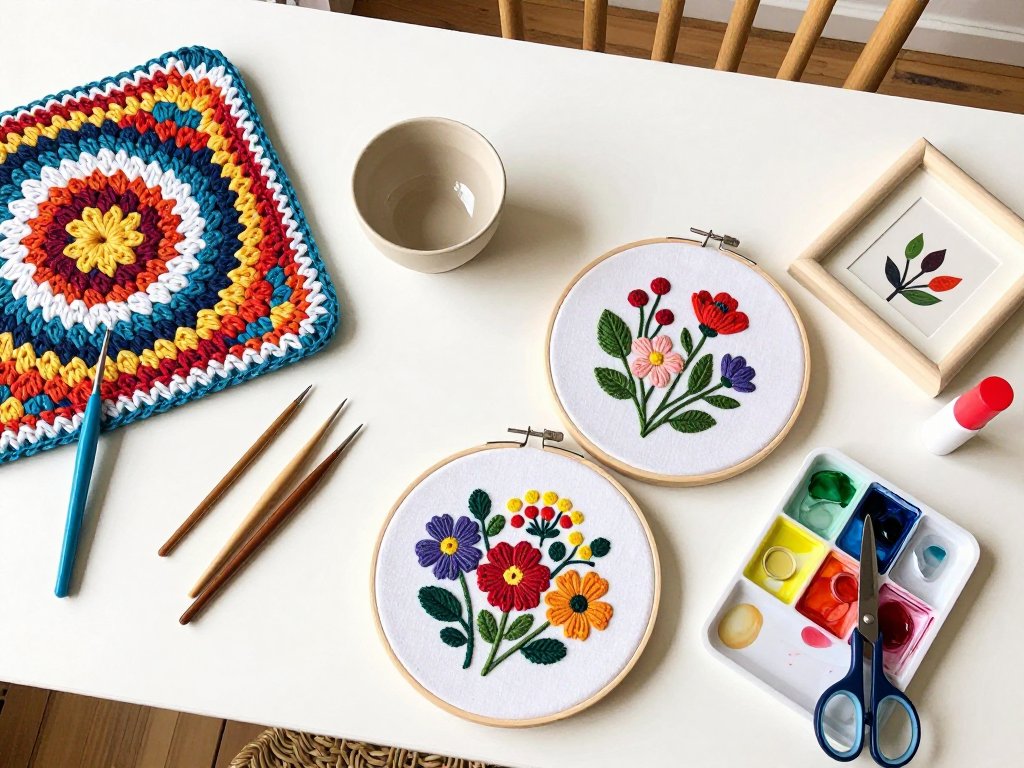
Crochet remains the undisputed queen of the hobby-maxxing world. It's portable, relatively inexpensive, and incredibly forgiving of mistakes.
Amigurumi (crocheted stuffed animals), wearables like sweaters and cardigans, and even crocheted home decor are all having a major moment.
Starter kits with a hook and a single skein of yarn cost under $15, and thousands of free patterns are available online.
For a deeper dive, check out our guide to crochet basics for absolute beginners.
2. Pottery and Hand-Building
Pottery studios have been booking up weeks in advance in cities across the country. While a pottery wheel requires access to a studio, hand-building with air-dry clay is an accessible alternative you can do at your kitchen table.
The tactile, grounding nature of working with clay makes it especially popular among people looking to unplug from screens.
A block of air-dry clay costs about $10 and can keep you busy for hours.
3. Embroidery and Cross-Stitch
Embroidery has shed its grandmotherly reputation and emerged as a favorite outlet for creative expression.
Modern embroiderers are stitching everything from cheeky phrases to intricate botanical designs. Cross-stitch, its more structured cousin, is also enjoying a renaissance thanks to modern, pop-culture-inspired patterns.
A complete beginner's embroidery kit with hoop, fabric, needle, and floss can be found for under $20.
4. Paper Crafts and Junk Journaling
Junk journaling — the art of creating handmade journals from recycled materials like old book pages, envelopes, ticket stubs, and scrap paper — is one of the fastest-growing craft trends of 2026.
It's inexpensive, eco-friendly, and endlessly creative. There are no rules. You can glue in a pressed flower next to a vintage map, write a line of poetry over a canceled stamp, and call it done.
It's a beautiful practice for people who want to create without pressure. Our beginner's guide to paper crafts has plenty of ideas to get you started.
5. Watercolor Painting
Watercolor has become the go-to medium for hobby-maxxers who want to paint but don't have space for oils or acrylics.
A small watercolor set, a couple of brushes, and a pad of paper is all you need.
The forgiving, fluid nature of watercolor makes it ideal for beginners who are nervous about "messing up." Many hobby-maxxers share their daily watercolor practices on Instagram, building supportive communities around small, consistent creative acts.
6. Knitting
Knitting has experienced a remarkable resurgence, particularly among younger crafters. Like crochet, it's portable and relatively affordable.
But knitting offers something slightly different: a rhythmic, meditative quality that many practitioners describe as moving meditation.
The rise of "mindful knitting" circles — both online and in person — speaks to the mental health benefits of this timeless craft.
If you're new to knitting, start with a simple scarf or dishcloth and work your way up.
7. Jewelry Making
Beading and jewelry making have moved far beyond friendship bracelets (though those are back, too).
Modern hobby-maxxers are working with semi-precious stones, polymer clay, wire wrapping, and even metal stamping to create personalized accessories.
Jewelry making offers the satisfaction of a finished product in a single sitting — a major draw for people with limited time.
A basic beading kit with pliers, wire, and assorted beads can be assembled for around $25.
8. Candle and Soap Making
The DIY home fragrance and bath products niche has grown into a full-blown hobby category.
Soy candle making, cold-process soap making, and bath bomb creation are all popular entry points.
These crafts have the added benefit of producing useful, giftable items. Many hobby-maxxers enjoy the science-like precision of measuring and mixing, combined with the creative freedom of choosing scents and colors.
Starter kits are widely available and typically cost between $30 and $50.
9. Botanical Pressing and Nature Crafts
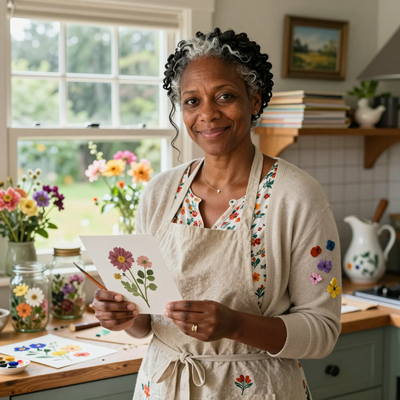
Pressed flower art, leaf rubbing, and nature journaling have become beloved low-cost hobbies for 2026.
All you need is a walk outside, a heavy book, and a bit of patience.
The results — pressed flowers framed in glass, botanical collages, or nature-inspired greeting cards — are stunning yet attainable.
This hobby pairs beautifully with junk journaling and paper crafts, and it encourages time spent outdoors, which is a bonus for mental health.
10. Macramé and Fiber Art
Macramé — the art of knotting cord into decorative patterns — continues to be a favorite for hobby-maxxers who want to create functional art.
Plant hangers, wall hangings, and even bags and belts can be made with nothing more than cotton cord and a simple knotting technique.
It's repetitive, relaxing, and produces impressive-looking results with very little skill required. A spool of macramé cord can be had for under $10.
Why Hobbies Are the Antidote to Screen Fatigue
It's no coincidence that the rise of hobby-maxxing has happened alongside growing awareness of the negative effects of excessive screen time.
The average American adult now spends over six and a half hours per day on digital media, according to a 2025 report by eMarketer.
Gen Z's average is even higher, at over eight hours.
Hands-on hobbies offer something screens cannot: tangible feedback. When you knit a row, you can see it.
When you press a flower, you can touch it. When you finish a watercolor, you can hold it up and say, "I made that." That feedback loop is deeply satisfying in a way that a like, a share, or a notification simply isn't.
Neuroscience backs this up. Engaging the hands in repetitive, focused tasks — whether it's stitching, shaping clay, or knotting cord — activates the parasympathetic nervous system, which calms the body's stress response.
This is sometimes called the "relaxation response," and it's the same mechanism that makes activities like knitting and crochet so effective at reducing anxiety.
There's also something powerful about reclaiming your attention. When you're elbow-deep in a craft project, you aren't checking email.
You aren't doomscrolling. You aren't comparing your life to someone else's highlight reel. You're just... making.
And that simple act of focused creation can feel revolutionary in an age of constant distraction.
How to Start Hobby-Maxxing Without the Overwhelm
One of the biggest barriers to starting a new hobby is the feeling that you need to be good at it — or that you need to invest in expensive equipment before you even know if you'll enjoy it.
Let me normalize something for you: my first knitted scarf was a tangled mess with holes in places holes shouldn't be.
My first batch of homemade candles looked like a science experiment gone wrong. And you know what?
I still felt proud.
Here are some tips that helped me — and many other hobby-maxxers I've spoken with — get started without the pressure.
Start Small and Cheap
Resist the urge to buy the premium starter kit. A $10 crochet hook and a $4 skein of yarn are enough to tell you whether you enjoy the craft.
You can always upgrade later. The goal is to lower the barrier to entry as much as possible.
Dollar stores, thrift shops, and online marketplaces like Facebook Marketplace are excellent sources of beginner supplies.
Follow Along with Tutorials
YouTube, TikTok, and crafting blogs are full of free, high-quality tutorials. Search for "absolute beginner" or "for beginners who have never [craft name] before." There's a whole ecosystem of creators dedicated to helping you start from zero.
You don't need a class — you just need the willingness to pause, rewind, and try again.
Embrace the Ugly Phase
Every new crafter goes through what the community lovingly calls the "ugly phase." That first crocheted square that looks more like a trapezoid.
That first watercolor that looks like a mud puddle. It's part of the process. The hobby-maxxing philosophy isn't about producing museum-quality work — it's about showing up and making something, even if it's imperfect.
Especially if it's imperfect.
Set a Timer, Not a Goal
Instead of telling yourself "I'll finish this scarf by Friday," try "I'll knit for fifteen minutes while my coffee cools." Hobby-maxxing is about the act, not the outcome. Short, consistent sessions build confidence and skill far more effectively than marathon crafting sessions that leave you frustrated.
Find Your Community
One of the most heartening aspects of the hobby-maxxing movement is how welcoming the online crafting community is.
Subreddits like r/crochet, r/embroidery, and r/junkjournals are filled with supportive, encouraging posts. Instagram and TikTok are full of crafters who celebrate progress over perfection.
Finding a community can make the difference between giving up after one attempt and sticking with it long enough to fall in love with the process.
Budget-Friendly Ways to Start Any Hobby
I know firsthand that when you're juggling a household budget, the idea of adding a "hobby expense" can feel daunting. But hobby-maxxing doesn't have to be expensive. In fact, many of the most rewarding crafts are also the most affordable.
- Thrift and repurpose: Check your local thrift store for yarn, fabric, embroidery floss, picture frames, and even old books for junk journaling. Craft supplies show up in donation bins all the time.
- Use what you have: A pencil and a piece of printer paper can be the start of a sketching practice. A handful of fallen leaves and a heavy book can become a pressed-flower project. Don't wait for the "right" supplies.
- Swap with friends: Start a craft supply exchange with friends or neighbors. One person's abandoned cross-stitch kit is another person's next obsession.
- Library resources: Many public libraries now lend craft supplies, including knitting needles, sewing machines, and even Cricut cutting machines. They also have an excellent selection of craft books and magazines.
- One-kit rule: If you're trying a new craft, buy a single beginner kit — not a bulk pack, not a subscription box. Just one kit. It removes the pressure of having "too much stuff" and lets you test the waters for under $30 in most cases.
The Deeper Gift of Hobby-Maxxing
What strikes me most about the hobby-maxxing movement is not the viral videos or the impressive finished projects. It's the quiet transformation that happens in people when they give themselves permission to make something imperfect.
I've heard from readers who picked up crochet after years of anxiety and found that the rhythm of the hook and yarn helped them sleep better.
I've talked to parents who started junk journaling with their kids and discovered a new way to connect.
I've seen neighbors swap handmade dishcloths and suddenly start talking to each other in ways they hadn't in years.
That's the real gift of hobby-maxxing. It's not about optimizing your hobbies for social media.
It's about remembering that you are a creator, not just a consumer. It's about proving to yourself that you can learn something new at any age.
And it's about finding joy in the simple act of making — stitch by stitch, brushstroke by brushstroke, page by page.
Conclusion: Your Hands Are Waiting
If you've been thinking about trying a new hobby but keep putting it off, consider this your gentle nudge. The yarn is waiting. The clay is waiting. The blank page is waiting. And you don't need to be talented, experienced, or especially patient. You just need to start.
In 2026, hobby-maxxing is more than a trend — it's a reminder that some of the best things in life are the ones we make with our own hands. However yours show up, wobbly or wonderful, they're enough.
So go ahead. Pick up that hook. Dip that brush into water. Press that flower between the pages of an old book. The hobby-maxxing movement is for everyone — and that includes you.