Introduction
Every day, your kitchen counter collects a few small treasures. A receipt from the coffee run. A crayon drawing rescued from the floor. A ticket stub from the movie you finally saw. Most of them end up in the recycling bin by Friday.
Scrap-a-day journaling catches those moments before they disappear. It is a gentle daily habit that turns life's littlest scraps into a handmade keepsake you can hold in your hands.
The best part? It takes about fifteen minutes a day. You do not need artistic talent, expensive supplies, or a perfectly tidy craft room. If you can glue one piece of paper to another, you can do this.
I have kept a scrap-a-day journal for two years now. Some days my page is one sentence and a pressed leaf. Other days it is a full collage of everything that happened. Both are exactly right.
This is not about making gallery-worthy art. It is about showing up, noticing the small things, and leaving a record of your days that no phone photo can replace.
When life feels rushed, a daily keepsake page is a tiny anchor. It slows you down for fifteen minutes and reminds you what actually happened today — not what the calendar said you should do.
Best of all, there is no pressure to be consistent or artistic. Some weeks you will fill every page. Other weeks you will barely manage one. The journal holds all of it without judgment.
What Is Scrap-a-Day Journaling?
A junk journal is a handmade journal made from recycled and upcycled papers — old letters, book pages, photographs, invoices, tickets, wrapping paper, even junk mail. It can be a stand-alone art piece, or it can be used daily, weekly, or monthly.
Scrap-a-day is simply the daily version. One small page or spread per day, capturing a keepsake with a few journaled lines.
Your keepsake might be a receipt, a pressed flower, a ticket stub, or your child's drawing. Your journaling might be three honest sentences about how the day felt.
That is the whole practice. No grand themes, no perfect handwriting, no pressure to be profound.
The magic is in the rhythm. When you collect one small thing every day, your journal becomes a quiet record of ordinary life. Years from now, you will open it and remember exactly what a random Tuesday felt like.
The same scrap that seems ordinary today becomes remarkable with time. A grocery receipt from this year is a time capsule of prices, brands, and errands. A child's scribble is a snapshot of how small their hands were. That is the quiet power of daily keepsake art.
What You Need: The Complete Supply List
Here is exactly what you need to start. Most of it is probably already in your house.
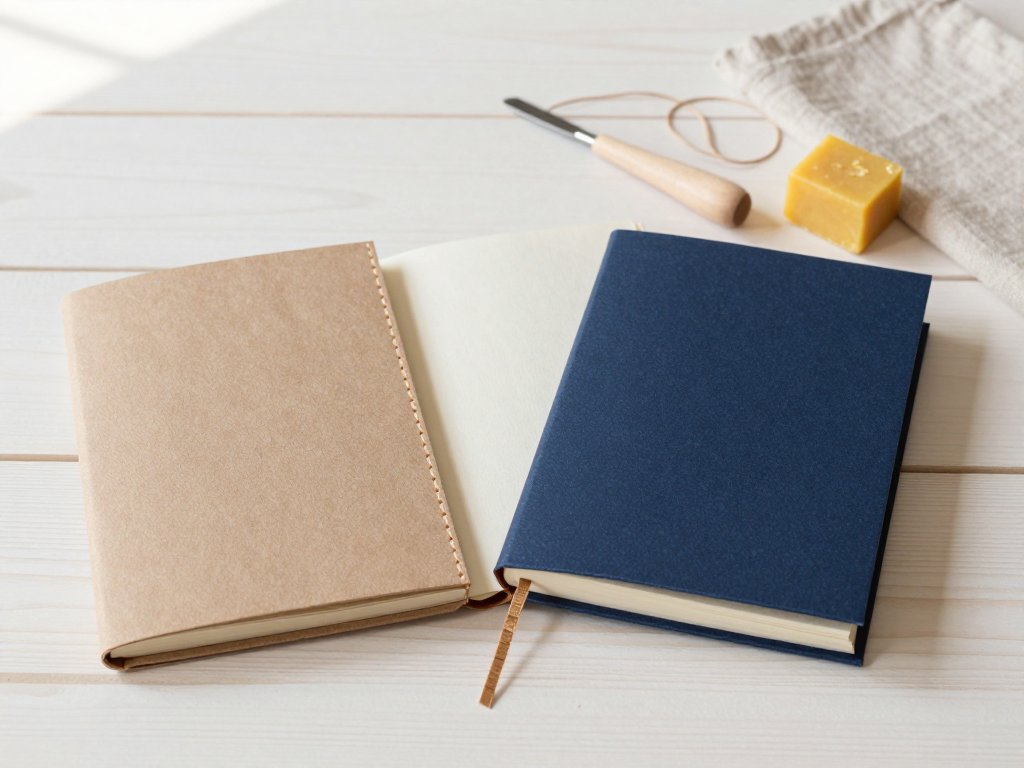
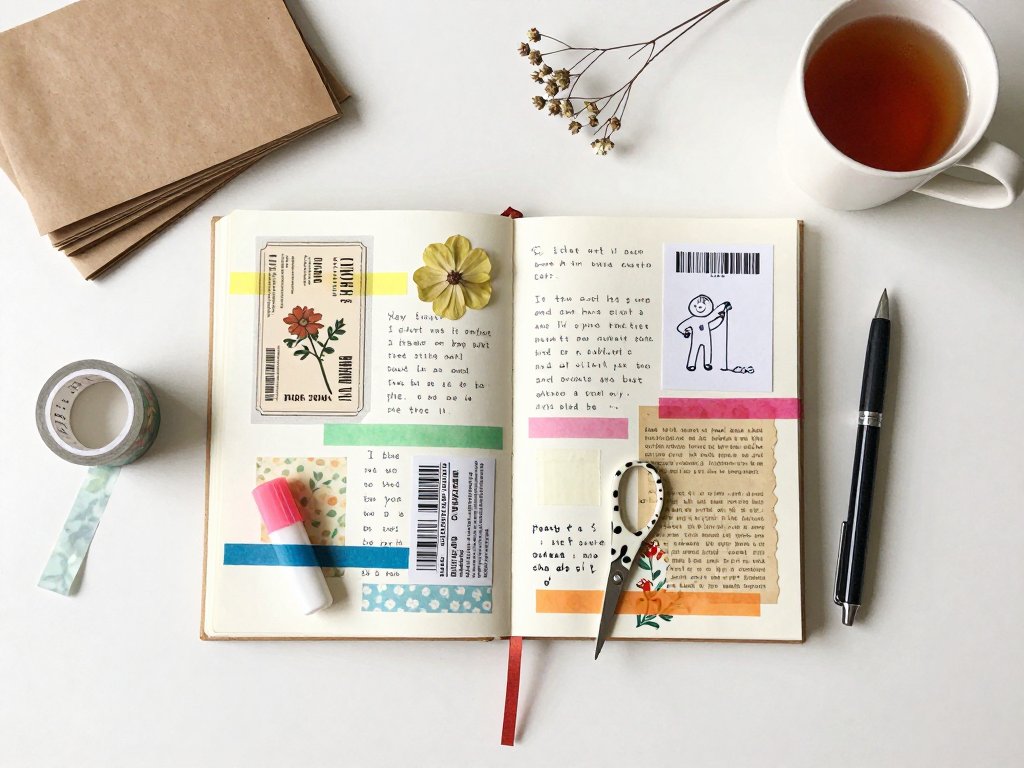
- A notebook or junk journal. Any size works. A simple spiral notebook is fine for beginners; a handmade junk journal is lovely once you have fallen in love with the habit.
- A glue stick. Choose acid-free if you can find it. It dries clear and stays where you put it.
- Washi tape. This is your best friend. It holds things in place, covers mistakes, and adds color with zero skill required.
- Scissors. Small, sharp ones for trimming photos and paper scraps.
- An ephemera stash. A shoebox or envelope where you collect ticket stubs, receipts, tags, and pretty scraps.
- Pens. A fine-tip pen that will not bleed through the page. Gel pens and archival pens are both good choices.
That is the entire list. You can add stickers, rubber stamps, and stencils later, but you do not need any of them on day one.
One tip: keep all of your supplies together in a small basket or pouch. When everything lives in one place, the fifteen-minute habit actually happens.
An old cookie tin makes a wonderful supply box. It keeps your glue stick, scissors, tape, and pens together, and it fits neatly on a shelf. When the tin comes out, your brain knows it is journaling time.
How to Set Up Your Journal
Before you make your first page, decide how you want to organize your journal. There are two simple approaches, and you can switch anytime.
Chronological is the easiest. Use the pages in order, one page per day, and let the journal tell time naturally. Flip through it and you can see your whole month at a glance.
Sections work well if you love structure. Divide your journal into parts — one for family moments, one for outings, one for everyday beauty, one for the kids' art. Mark each section with a tab or a strip of washi tape.
You can also skip structure entirely and glue pages in as you go. Many scrap-a-day journalers add extra pages with washi tape whenever they need them.
Write your name and the start date on the first page. It takes ten seconds and makes the journal feel official. Then make one small test page — glue down a scrap and write a few lines — so the first real page no longer feels precious.
The 15-Minute Daily Routine
Here is the routine I use, step by step. Once you have done it a few times, it takes even less than fifteen minutes.
- Keep your journal and supplies in a spot you see every day. The kitchen counter, the bedside table, or the coffee table — anywhere you naturally land.
- Pick your keepsake for the day. Something small that crossed your path — a receipt, a leaf, a tag, or a drawing.
- Glue the keepsake onto your page. Place it a little off-center for interest, and trim it first if it is large.
- Add one piece of washi tape. Along an edge, across a corner, or over a messy glue spot. This is your instant design element.
- Write a few lines. The date, the place, and one true sentence about the day. Nothing more is required.
- Close the journal and walk away. Done is better than perfect.
Keep a small pocket in the back of your journal made from a folded scrap of paper. On busy days, drop the day's keepsake in the pocket and glue it in the next morning.
To make the habit stick, do your page at the same time each day. After breakfast, during nap time, or right after dinner all work beautifully.
Missed a day? Skip it and move on. Catching up is optional — the journal works best when it reflects real life, gaps and all.
A finished week is a small miracle. Five or six pages, each holding a different day. Flip through them on Sunday night and you will remember the whole week in a few minutes. That weekly flip-through is my favorite part of the habit.
20+ Daily Prompts and Keepsake Ideas
Stuck on what to save? Here are more than twenty ideas to get you started. Pick one that matches your day.
- A receipt from a favorite coffee shop
- A pressed flower or leaf from a walk
- A movie or bus ticket stub
- Your child's latest drawing or scribble
- A gift tag from a present
- A sticker from a piece of fruit
- The wrapper from a special treat
- A business card from somewhere new
- A napkin with a note written on it
- A pressed wildflower from the garden
- A postage stamp you love
- A train or plane boarding pass
- A museum or zoo entry ticket
- The paper sleeve from a bookstore
- A recipe card you tried this week
- A leaf in autumn colors
- A ribbon from a package
- A menu from a favorite restaurant
- The front of a birthday card
- The date stamp from a library book
- A seed packet from the garden center
- A paper doily from a bakery
- A luggage tag from a trip
- A pressed four-leaf clover
If you have no keepsake at all, just journal. Write what you did, what you ate, what made you laugh. The writing alone is a keepsake.
Where to Find Free Ephemera
You do not need to buy a single piece of ephemera. Your own home is a treasure chest, and it restocks itself every week.
- The recycling bin. Cardboard packaging, cereal boxes, and paper bags all have beautiful printed surfaces.
- Junk mail. Flyers, catalogs, and envelopes are full of color and texture.
- Old books. Paperback covers, title pages, and damaged pages make gorgeous backgrounds.
- Nature finds. Leaves, petals, and small feathers pressed flat look stunning on paper.
- Gift wrap and tissue paper. Save the pretty scraps from birthdays and holidays.
- Store receipts and tags. Your everyday errands are a constant supply.
Keep a shoebox or a large envelope labeled "ephemera" and toss things in as you find them. When you sit down to journal, you will always have something to choose from.
Ask friends and family to save their pretty scraps for you, too. Crafty people love sharing, and the supply is endless.
If you collect nature finds, press them before gluing. Lay flowers and leaves between two sheets of paper towel, stack a few heavy books on top, and leave them for a week. Flat, dry treasures glue down easily and keep their color.
Simple Page Layout Ideas
You do not need design skills to make a page that looks lovely. Try these six layouts and rotate through them.
- The corner anchor. Glue your keepsake in one corner and write your journaling in the opposite corner.
- The strip. Lay two or three scraps in a row along the bottom of the page, then write above them.
- The frame. Tape your keepsake in the middle and add washi tape borders around the edges.
- The pocket page. Fold a scrap of paper into a small pocket, glue the edges, and tuck your keepsake inside.
- The layered stack. Glue one scrap, then a slightly smaller one on top, then your keepsake on top of that.
- The collage edge. Cover one edge of the page with small overlapping scraps like a border.
Repeat your favorite layouts. Repetition gives the whole journal a cohesive look, even when your days are completely different from one another.
Dealing with Blank-Page Fear
The blank page can feel intimidating. Here is the truth: the first page is the hardest, and it gets easier after that.
Start with a piece of washi tape. Just one strip, right down the middle of the page. Now the page is no longer blank, and the pressure is gone.
Or glue down your keepsake first and let it decide where the rest goes. The keepsake does the work; you simply follow it.
Write badly on purpose. One page of messy handwriting and crooked tape is proof that you showed up, and the next page will be easier because of it.
Remember the golden rule of scrap-a-day journaling: there is no wrong way to do this. A page you consider boring today will be fascinating to you in five years.
Making It a Family Activity
Scrap-a-day journaling is wonderful on your own, but it is even better with kids at the table.
Give each child their own small notebook and their own glue stick. Let them make their pages however they like. Their versions will be messier than yours — and more wonderful.
Set a family habit: fifteen minutes after dinner, everyone makes a page together. It becomes a calm, cozy ritual instead of one more task on the list.
Ask your kids for their scraps. A drawing they almost threw away, a sticker they saved, a note they wrote you — these are gold for your journal.
Over time, the journal becomes a family archive. One day your children will open it and see their childhood from the inside.
Even toddlers can join in. Hand them a glue stick and a pile of paper scraps, and let them decorate a page while you make yours. They will feel included, and you will get fifteen quiet minutes.
Troubleshooting: Common Problems and Fixes
Even a simple craft has small frustrations. Here is how to handle the most common ones.
Glue wrinkling your paper? Use less glue and apply it evenly. A thin, even coat wrinkles far less than a thick blob. Press the paper flat with the back of a spoon, then let it dry under a heavy book for a minute.
Running out of ideas? Keep your prompt list handy and pick one at random. Or skip the keepsake entirely and just write three lines about your day. The journal is a habit, not a chore.
Ink bleeding through the page? Use a pen labeled archival or pigment-based, and test it on the back page first. If it still bleeds, glue a scrap of paper behind your writing.
Running low on supplies? Ephemera is everywhere. A walk around the block, a quick look through the recycling bin, or a trip to the mailbox can refill your stash for a week.
Feeling behind? Missed three days, or ten? Just start again today. Your journal keeps no score, and neither should you.
Conclusion
Scrap-a-day journaling is the gentlest craft habit I know. Fifteen minutes a day. One small keepsake. A few honest lines.
It costs almost nothing, it takes almost no skill, and it gives you something priceless: a handmade record of your ordinary, extraordinary days.
Start tonight. Glue down one receipt or one leaf. Write the date and one true sentence. That is all it takes.
In a year, you will hold a book full of your life in your hands — and you will be so glad you started today.
Your children will remember the evenings you spent making pages together far longer than they will remember any perfectly organized photo album. Start small, start tonight, and let the journal grow with you.