Introduction
If you have ever stood in the art supply aisle staring at the price tags on stretched canvases, you know the feeling. A single 16-by-20-inch canvas can cost anywhere from eight to twenty dollars depending on the brand, and if you paint regularly, those costs add up fast. For beginners working through exercises and studies, the expense can feel like a barrier to practice. The good news is that you have more options than you think, and many of them cost a fraction of what you might expect.
This guide walks through every budget canvas option available today: stretched canvases that won't break the bank, canvas boards for practice, canvas pads for studies, and even some clever DIY approaches. By the end, you will know exactly what to buy for your next project and how to get the most from every dollar you spend.
Whether you are a beginner painting your first landscape or an experienced artist who simply wants to spend less on materials, there is something here for you. Let us start with the most common option and work our way through the alternatives.
Understanding Canvas Types and Price Ranges
Before diving into specific recommendations, it helps to understand what you are actually paying for. Not all canvases are created equal, and knowing the difference between the types will help you choose wisely.
Stretched Canvases
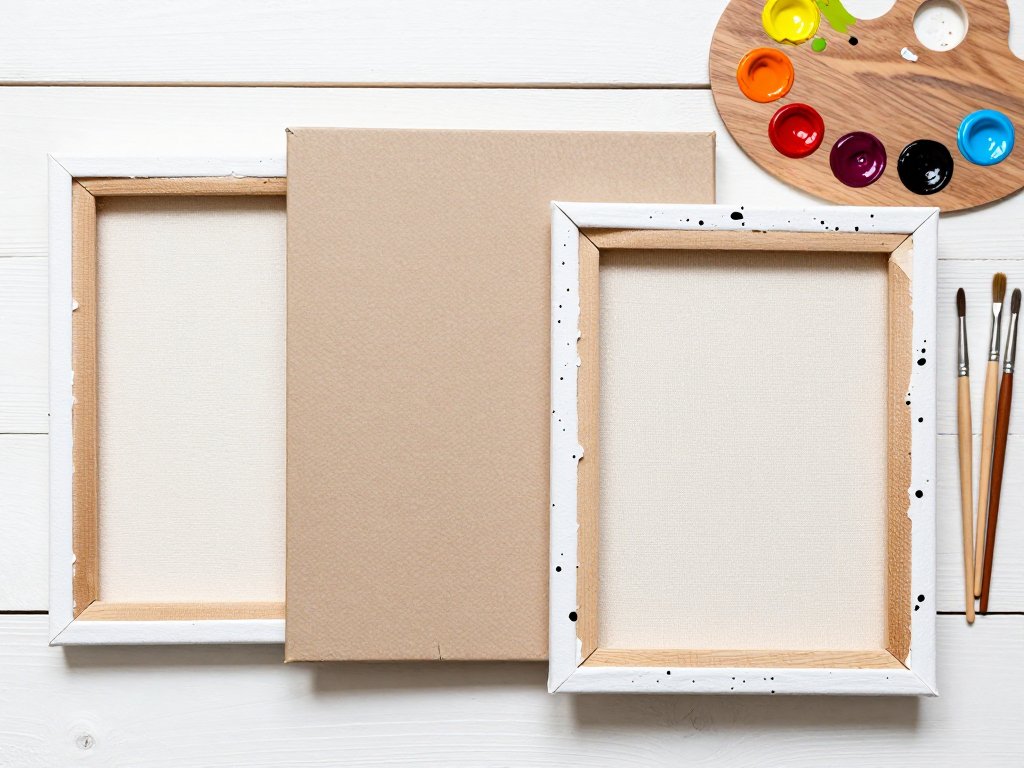
These are the classic canvases you see in every art store. A piece of cotton or linen fabric is stretched over a wooden frame (called stretcher bars) and secured with staples on the back. The fabric is typically primed with gesso so it is ready to paint on right out of the package.
Typical price range: Five to twenty dollars per canvas for standard sizes, depending on brand and whether you buy single or multipacks. Professional-grade stretched canvases can go much higher.
Best for: Finished artwork you intend to display, gallery submissions, and paintings where the canvas edge will be visible (gallery-wrap style).
Canvas Boards
Canvas boards are exactly what they sound like: canvas fabric adhered to a stiff board backing, usually cardboard or Masonite. They do not have a wooden frame, which makes them much thinner and lighter than stretched canvases.
Typical price range: Two to six dollars per board, with multipacks bringing the per-unit cost even lower.
Best for: Practice paintings, studies, student work, and any project where you plan to frame the finished piece under glass.
Canvas Pads
A canvas pad is like a sketchbook, but the pages are made of primed canvas paper or lightweight canvas. Each sheet is peeled off as you use it. The surface has a canvas-like texture but is much thinner and less durable than stretched canvas or canvas board.
Typical price range: Eight to fifteen dollars for a pad of ten to twelve sheets, making each sheet around one dollar or less.
Best for: Quick studies, color mixing practice, technique exercises, and travel painting where portability matters.
Canvas Rolls
Buying canvas by the yard gives you the most material for your money, but it requires some work on your end. You cut the fabric to size and either stretch it over your own frames or mount it onto boards.
Typical price range: Eight to twenty dollars per yard for cotton duck canvas, depending on quality. A single yard can yield multiple canvases depending on the sizes you cut.
Best for: Artists who paint regularly in nonstandard sizes and are willing to do some preparation work.
Best Budget Stretched Canvas Brands
If you want the classic stretched canvas look without the premium price tag, these brands deliver reliable quality at reasonable prices.
Artist's Loft (Michaels)
Michaels store brand, Artist's Loft, offers some of the most affordable stretched canvases on the market. A 16-by-20-inch canvas typically runs about five dollars, and they frequently go on sale for much less during store promotions. The canvas uses medium-weight cotton and comes double-primed, meaning it is ready to paint on without additional preparation.
The frames are made from pine and are sturdy enough for most work, though very heavy impasto techniques may cause slight warping over time. For acrylic painting and most oil painting, these canvases perform well enough that many artists use them for finished work, not just practice.
Where to buy: Michaels stores and online. Watch for the weekly coupons and bulk-pack deals where you can get six canvases for the price of three.
Master's Touch (Hobby Lobby)
Hobby Lobby's house brand is another solid contender. Their 16-by-20-inch canvases hover around six dollars individually, but the value packs bring the cost down closer to four dollars per canvas. The cotton fabric is medium-weight with a medium-tooth surface that holds paint well.
One advantage of Master's Touch is that their stretcher bars are slightly thicker than some budget brands, which reduces warping. The canvas is triple-primed, giving you a smooth, even surface that does not need additional gesso for most techniques.
Where to buy: Hobby Lobby stores and online. Their website often runs 40 percent off sales on all canvas brands, which is the best time to stock up.
U.S. Art Supply
This brand is available primarily through online retailers and offers one of the best price-to-quality ratios you will find. A set of five 11-by-14-inch canvases costs around eighteen dollars, landing at about three-sixty per canvas. For the quality, that is impressively low.
U.S. Art Supply uses 100 percent cotton duck fabric with an acid-free acrylic gesso primer. The stretcher bars are kiln-dried pine, which resists warping better than standard pine. Artists who have tested these canvases report they perform comparably to brands that cost twice as much.
Where to buy: Amazon and other online retailers. The bulk packs offer the best value, especially the twenty-pack of 8-by-10-inch canvases, which comes to about one-seventy per canvas.
Blick Studio Canvas
Blick Art Materials produces their own studio-grade canvas line that sits right at the sweet spot between budget and quality. A single 16-by-20-inch canvas costs around seven dollars, but Blick Studio's quality control is noticeably better than some of the store brands.
The fabric is 100 percent cotton with an even, medium-tooth texture. The stretcher bars are cut with precision, meaning you rarely get a warped or crooked frame. For artists who have been frustrated by off-square budget canvases, Blick Studio is worth the small premium.
Where to buy: Blick Art Materials stores and online. Their student-grade pricing and frequent sales make this an excellent choice for regular painters.
Canvas Board Alternatives for Serious Savings
Canvas boards are the unsung heroes of budget painting. They offer a genuine canvas surface at a fraction of the cost of stretched canvases, and they have some practical advantages that stretched canvases simply cannot match.
Why Canvas Boards Are Worth Your Attention
The biggest advantage of canvas boards is the price. A pack of ten 8-by-10-inch canvas boards from Artist's Loft costs about twelve dollars, which works out to one-twenty per board. Compare that to stretched canvases, where a single 8-by-10 typically costs three to four dollars, and the savings become obvious.
Canvas boards are also completely rigid, which means no warping regardless of how heavy your paint application is. They stack flat for easy storage, fit perfectly into standard picture frames, and are much lighter to ship or carry. If you paint in series or need to produce multiple pieces for a craft fair or art show, canvas boards can save you a significant amount of money.
Best Budget Canvas Board Brands
Artist's Loft Canvas Panels: These are the most affordable option at around twelve dollars for a ten-pack of 8-by-10-inch panels. The canvas is medium-weight cotton with a medium-tooth surface, mounted on acid-free board. They accept acrylic and oil paint well, though very thin washes may cause the board texture to show through. A quick additional coat of gesso solves this easily.
Strathmore Canvas Boards: Strathmore is known for their paper quality, and their canvas boards reflect the same attention to detail. A six-pack of 9-by-12-inch boards runs about fourteen dollars. The canvas has a finer weave than most budget boards, which gives a smoother finish for detailed work. These are a good middle-ground option if you want to step up from the store brands without paying stretched-canvas prices.
Fredrix Canvas Boards: Fredrix has been making artist canvases since the nineteenth century, and their canvas boards live up to the reputation. A five-pack of 11-by-14-inch boards costs around sixteen dollars. The canvas is triple-primed and has a beautiful even texture. These are the closest you will get to a professional painting surface at a budget price.
When to Choose Canvas Boards Over Stretched Canvases
Canvas boards are the better choice when you are painting studies, practicing techniques, or creating work that will be framed. They are also ideal for students, for painters who work in small formats, and for anyone who wants to keep their supply costs manageable. The main tradeoff is that canvas boards cannot be displayed without a frame the way gallery-wrap stretched canvases can, and some painters prefer the slight give of a stretched surface for certain techniques.
If you are creating finished pieces for display and want to frame them anyway, canvas boards save you money without sacrificing quality. Simply pick up standard-size frames at a craft store or online, drop the board in, and you have a professional-looking presentation at a fraction of the usual cost.
Canvas Pads: The Ultimate Practice Surface
For painters who go through multiple studies and exercises every week, canvas pads are the most cost-effective option available. Each sheet costs about one dollar or less, and you get the feel of painting on canvas without the expense of stretched frames or boards.
Top Canvas Pad Options
Canson Canvas Pad: Canson's canvas pad contains ten sheets of 9-by-12-inch primed canvas paper. The surface has a textured, canvas-like feel that accepts acrylic and oil paint well. It costs about ten dollars, making each sheet roughly one dollar. The paper is heavy enough that it does not buckle badly with moderate paint application, though heavy washes will cause some rippling.
Strathmore 400 Series Canvas Pad: This is a step up in quality. The 9-by-12-inch pad costs around thirteen dollars for twelve sheets. The canvas paper has a more pronounced texture that closely mimics stretched canvas. The sheets are also thicker than the Canson option, which means less buckling with wet media. Many instructors recommend this pad for students because it gives the most realistic painting experience at the lowest per-sheet cost.
Blick Studio Canvas Pad: Blick's house brand offers excellent value with their studio canvas pad. A 9-by-12-inch pad with twelve sheets runs about eleven dollars. The surface takes acrylic beautifully and even handles light oil painting work. The paper has enough tooth to hold multiple layers of paint without turning into a muddy mess.
How to Use Canvas Pads Effectively
Canvas pads shine for daily practice, color mixing exercises, value studies, and trying out new techniques without the pressure of working on an expensive surface. Keep one on your painting table and commit to filling one sheet per day. You will improve faster than you expect, and your wallet will thank you.
For finished studies that you want to keep, you can mount canvas paper sheets onto a rigid backing using acrylic matte medium. Simply brush medium onto the back of the sheet and press it onto a piece of foam board or Masonite. This gives you a sturdy panel that looks and feels like a canvas board, at a fraction of the cost.
DIY Canvas Options: Make Your Own and Save More
If you are willing to put in a little extra time, making your own canvases can cut your costs by fifty percent or more. You have several approaches to choose from depending on your comfort level with tools and materials.
Stretching Your Own Canvases
Buying stretcher bars and canvas fabric separately and assembling them yourself is the most traditional DIY approach. Stretcher bars are sold in pairs (two bars of the same length), so you buy one pair for each dimension of your canvas. A set of stretcher bars for a 16-by-20-inch frame costs about four to six dollars, and a yard of cotton duck canvas costs eight to fifteen dollars. From one yard, you can stretch multiple frames depending on the sizes.
If you stretch four 16-by-20-inch canvases from one yard of fabric, your per-canvas cost comes to roughly four dollars for the fabric plus five dollars for the stretcher bars, for a total of about nine dollars. That is comparable to a mid-range store-bought canvas, but you have the advantage of choosing your own fabric quality and knowing exactly how your canvas was constructed.
Where stretching your own really pays off is for nonstandard sizes. If you want a 30-by-40-inch canvas, store prices jump significantly. Making it yourself costs roughly the same per square foot as a smaller canvas, which means bigger savings on larger pieces.
Gessoing Your Own Raw Canvas
If you find a good deal on raw (unprimed) canvas, you can save money by priming it yourself with gesso. Raw canvas is often significantly cheaper than pre-primed, and applying gesso lets you control the surface texture. A quart of gesso costs about twelve dollars and covers roughly ten to fifteen square yards of canvas. If raw canvas costs six dollars per yard instead of twelve for pre-primed, the savings add up fast, and the priming process takes only an extra hour.
Where to Find the Best Deals
Knowing where to shop is just as important as knowing what to buy. Here are the best sources for budget canvas supplies.
Online Retailers
Amazon: The range is enormous, and customer reviews help you avoid low-quality options. U.S. Art Supply and Master's Touch have strong presences here. Buy in multipacks for the best per-unit pricing. A twelve-pack of 8-by-10-inch stretched canvases often sells for under thirty dollars.
Blick Art Materials: Blick offers competitive pricing on their house brands and frequent sales. Their student-grade canvas is particularly affordable. The website also lets you order canvas by the roll, which is the most economical option if you go through a lot of material.
Jerry's Artarama: Jerry's has built a reputation for discount art supplies. Their store brand, Simply Simmons, offers canvases at prices that rival the big-box store brands. They also run regular clearance sales where you can pick up premium brands at budget prices.
Physical Stores
Michaels: The weekly coupon at Michaels is legendary among budget-conscious artists. Their 40 percent off one item coupon applies to full-price canvases, and their bulk-pack sales can bring per-canvas costs below three dollars. Sign up for their email list to get the coupons delivered automatically.
Hobby Lobby: Every other week, Hobby Lobby runs a 40 percent off sale on all canvas. This is the time to buy. Stock up on Master's Touch canvases and canvas boards during these sales and you will never pay full price.
Dollar stores: Do not overlook dollar stores entirely. While their canvas quality is inconsistent, some dollar stores carry surprisingly usable 8-by-10-inch canvases for one to two dollars each. They are not suitable for finished artwork, but they are excellent for practice and technique exercises where surface quality matters less.
Secondhand and Surplus Sources
Thrift stores and online marketplaces: Artists occasionally sell bulk supplies when they move or switch media, and you can find lots of canvases on Facebook Marketplace, Craigslist, or at local thrift stores for pennies on the dollar. Art school surplus sales at the end of each semester are another great source — if you have a local college with an art program, ask about their surplus schedule.
Painting Over Old Canvases
One of the simplest ways to save money on canvases is to reuse what you already have. If you have old paintings you do not love, there is no rule saying you cannot paint over them.
For acrylic paintings, if the old layer is thin with no heavy texture, simply sand lightly with fine-grit sandpaper, wipe away the dust, and start painting. If there is significant texture, apply two coats of gesso for a fresh white surface. For oil paintings, the old layer must be fully cured first, which takes six months to a year. Once cured, sand lightly, clean with mild solvent, and apply oil primer before painting.
Skip reusing a canvas if the stretcher bars are warped, the fabric is torn, or the old paint layer is cracking or flaking. A damaged support compromises your new painting, and the frustration is not worth the few dollars saved.
Canvas Quality: What Actually Matters
When you are buying budget canvases, knowing what quality indicators to look for helps you avoid the truly bad options and identify the hidden gems.
Fabric Quality
The most common canvas material is cotton duck, which comes in different weights measured in ounces per square yard. Lighter-weight cotton (around seven ounces per yard) is typical for budget canvases and works fine for most acrylic and oil painting. Heavier-weight cotton (ten to twelve ounces per yard) is more durable and resists sagging but costs more.
Linen is generally considered superior to cotton because of its strength and tighter weave, but it is significantly more expensive. For budget painting, quality cotton duck is perfectly adequate. The weave should be even and tight, with no loose threads or gaps.
Priming Quality
Most budget canvases come pre-primed with acrylic gesso. The primer seals the fabric so paint does not soak through and provides a surface that paint can grip. A well-primed canvas should have an even white surface with no thin spots showing the fabric color through. Double-primed and triple-primed canvases give you a smoother surface that requires less additional preparation.
Stretcher Bar Quality
For stretched canvases, the frame quality matters as much as the fabric. Look for frames with keys (the small triangular wedges in the corners) that allow you to tighten the canvas if it sags over time. The bars should be straight, with cleanly cut corners. Budget canvases sometimes have stretcher bars that are slightly warped or cut at imprecise angles, which shows up as uneven corners when the canvas is stretched.
Stapling and Construction
A well-made canvas has staples placed evenly along the back edges, with the corners neatly folded like a hospital bed corner. Staples should be snug against the frame, not loose or half-driven. Poor stapling is a sign of rushed construction and may lead to the canvas pulling loose under tension.
Quick Reference: Best Budget Choice for Every Situation
Here is a cheat sheet to help you choose the right budget option for your next painting.
For finished artwork to display unframed: Buy stretched canvases from U.S. Art Supply or Blick Studio. The gallery-wrap edges look clean and professional without a frame.
For finished artwork that will be framed: Buy canvas boards from Fredrix or Strathmore. You get the same quality canvas surface at half the price of stretched canvases.
For daily practice and studies: Buy a Strathmore canvas pad. Each sheet costs about a dollar, and you can practice as much as you want without guilt.
For large canvases (over 24 inches): Make your own using stretcher bars and canvas by the yard. The savings increase with every square foot.
For student classes and workshops: Buy budget stretched canvases from Artist's Loft or Master's Touch during a 40 percent off sale. Stock up during sales and you will have canvases ready for months.
For experimental techniques and risky projects: Use dollar store canvases or recycled canvases. If the experiment goes wrong, you are out very little money.
For travel and plein air painting: Canvas boards are thin, lightweight, and easy to pack. A pad of canvas paper is even more portable.
Conclusion
Painting on a budget does not mean you have to compromise on the joy of creating. The canvas you choose matters, but what matters more is that you keep painting. A study on a dollar canvas board teaches you just as much as one on a premium stretched canvas. The skills you build, the color relationships you discover, and the satisfaction of finishing a piece have nothing to do with the price tag on your support.
Start by trying a few of the options mentioned here. Pick up a canvas pad for your daily warm-ups. Grab a pack of canvas boards for your next finished piece. If you feel adventurous, make your own panels from Masonite and raw canvas. Each approach has its own feel and its own advantages, and you will develop preferences over time.
The best canvas is the one you actually use. With these budget options, there is no reason to hold back. Buy a few, start painting, and let the work itself be the focus.