Introduction
I still remember the October I decided to draw something every single day. I was eleven, and my sketchbook was a spiral notebook with a blue cover and pages that tore out a little too easily.
I drew the same maple leaf from our front yard nine times before I got one I liked. I kept that notebook for years.
That little habit taught me something I still believe: a drawing a day does not have to be good to be good for you. It just has to happen. It has to be yours.
That notebook taught me something else, too. October has always felt like a beginning to me. The air turns crisp, the light goes golden, and the world seems to slow down just enough to notice small things. It is the perfect month to start a quiet habit.
This year, you can give yourself the same gift. Inktober is nearly here, and with a little preparation in the weeks before October 1st, you can walk into the month calm, equipped, and genuinely excited to draw.
What Is Inktober?
Inktober is an annual drawing challenge created in 2009 by illustrator Jake Parker. The idea is beautifully simple: make one ink drawing every day of October and share it online with the hashtag #Inktober.
Each year, an official prompt list is released — usually in September — with a single word for every day of the month. One day might be "dream," and the next might be "tangled." You can follow the list exactly, use it as loose inspiration, or ignore it completely.
The official rules are just three: make a drawing in ink, share it, and have fun. That is it. There is no wrong way to do Inktober, and that is precisely why it works so well for beginners.
Parker started the challenge as a personal project to sharpen his own inking skills, and it grew from there. Today, people in every time zone take part — professional illustrators, hobbyists, and plenty of first-timers who have never posted a drawing before.
You do not need to be an artist. You do not need a studio or years of practice. You need a pen, some paper, and a willingness to make marks that might not work out.
Why ink, of all mediums? Because ink does not forgive, and that is exactly the point. When you cannot erase, you learn to commit to a line. You learn to let a drawing be what it is — a very freeing feeling.
There is also something wonderful about the shared experience. When you post your drawing, you join a global conversation that has been happening every October for over a decade. Strangers cheer for your wobbly first attempts, and you cheer for theirs.
Gather Simple Supplies
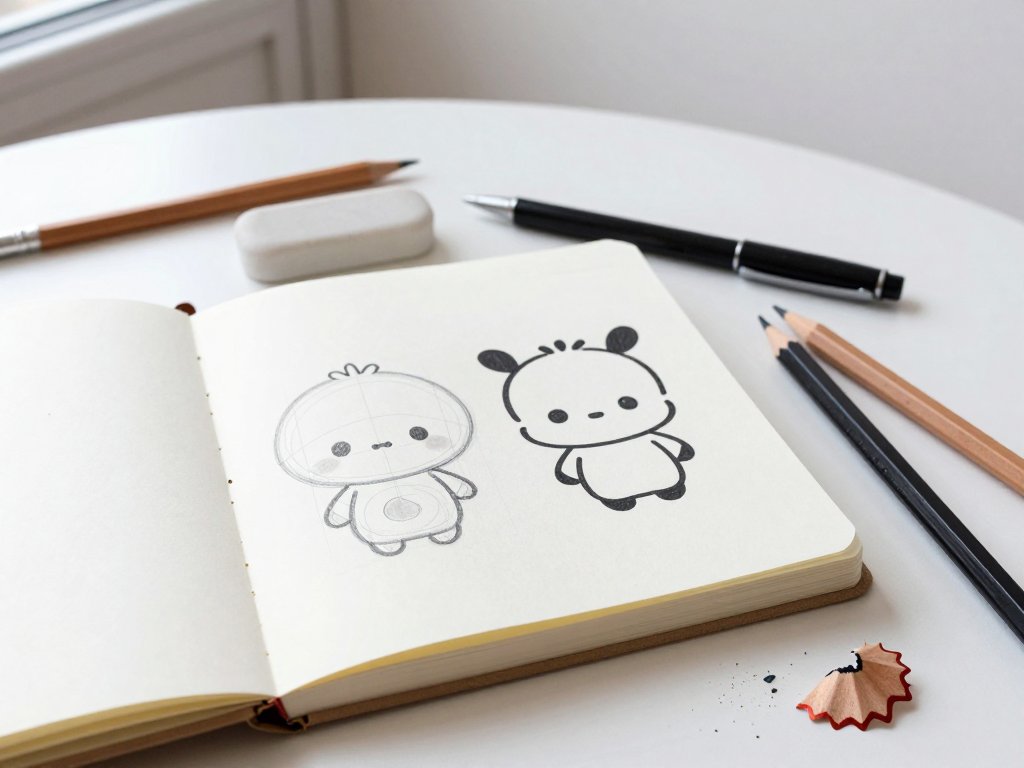
Here is the best news about ink drawing: the supply list is tiny. A fineliner pen or two, a small sketchbook, and you are ready to begin.
A fineliner around 0.3 or 0.5 works beautifully for most subjects. If you only buy one pen, buy a black one. If you buy two, get a fine tip and a slightly thicker one for bold lines and quick shading.
For paper, choose a small sketchbook that fits in your purse or your coat pocket. You want something you will actually carry, because the drawings that count are the ones you make in real life — at the kitchen table, in the school pickup line, on the back porch.
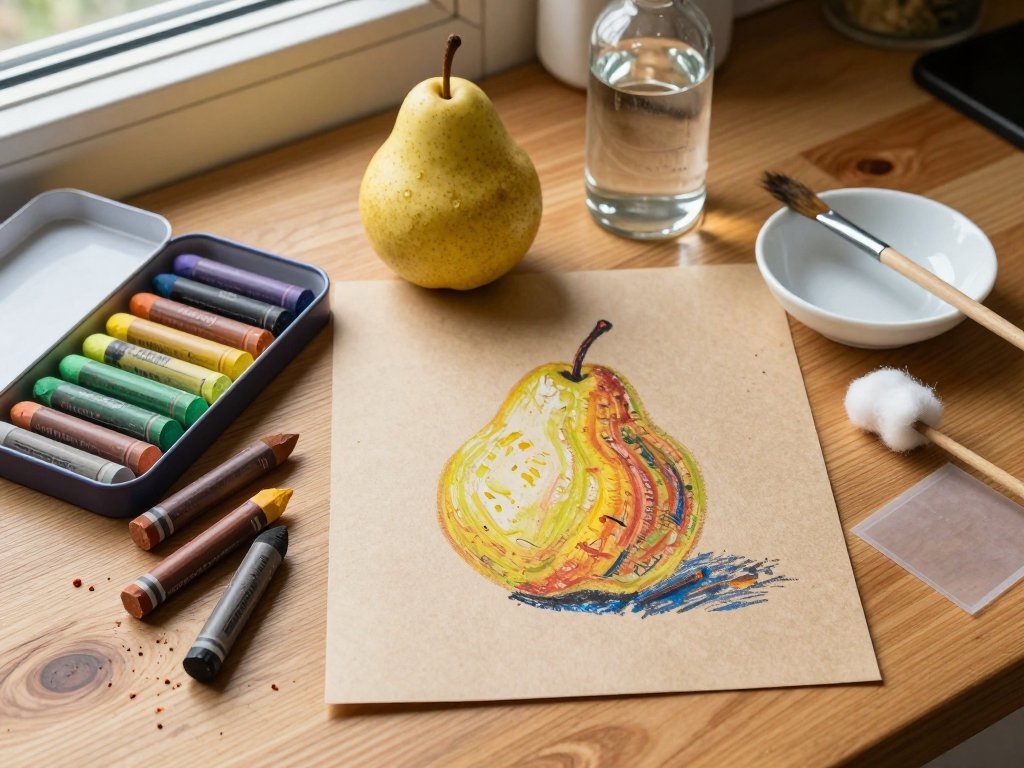
Some artists add a waterbrush and water-soluble ink, which lets you create soft, dreamy washes. That is a lovely extra, but it is completely optional. On a busy day, a ballpoint pen and a scrap of printer paper work just fine.
A quick note on paper: some thin pages let ink bleed into soft gray fuzz. If that bothers you, look for a sketchbook labeled for ink or mixed media. If it does not bother you, draw on anything — the fuzz is part of the charm.
The point is to remove every barrier between you and the page. If your supplies live in a little pouch on the kitchen counter, you will draw far more than if they live in a drawer in the craft room.
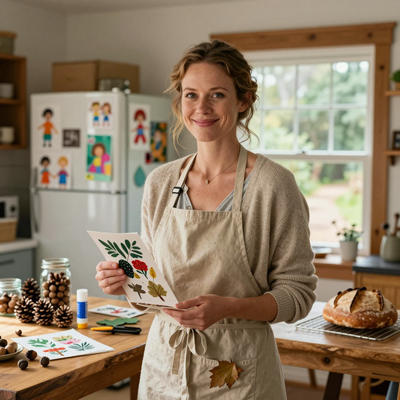
This is also a lovely month to draw alongside your kids. Set them up with their own paper and pens, and the kitchen table becomes a tiny art studio. Some of my favorite October memories involve two heads bent over two sketchbooks, quiet and content.
Practice the Basic Techniques
Ink is a confident medium, but that confidence is learnable. Spend a little time in September playing with four basic techniques, and October will feel like play instead of pressure.
Hatching
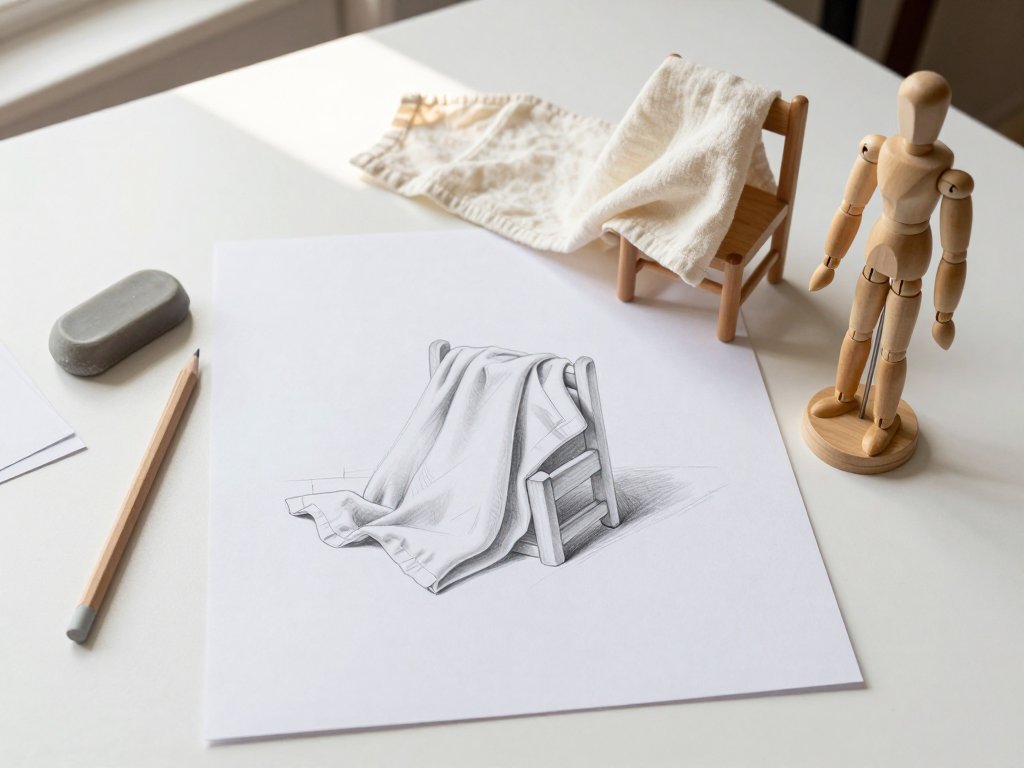
Hatching means filling an area with parallel lines. Lines that sit close together read as darker shadow; lines that spread apart read as lighter tone. Try it on a simple shape like a ball, a leaf, or a slice of bread.
Cross-Hatching
Cross-hatching layers lines in different directions, like a loose weave of thread. It builds richer, deeper shadows and gives your drawings texture and weight. Practice on a coffee mug or a pinecone from the yard.
Stippling
Stippling is shading with dots — hundreds of tiny marks that build tone the way pixels build a photograph. It is slow, meditative work, and it is perfect for quiet evenings when you want the rest of the house to hush around you.
Contour Line
A contour drawing follows the edges of your subject, slowly and carefully, without looking down at your paper. It trains your eye to really see. Try it with your hand, a houseplant, or your child's favorite stuffed animal.
You do not need to master any of these techniques before October. You just need to know what they are called and what they feel like. Think of them as tools in a pencil case — you will reach for different ones on different days.
Warm Up with Daily Sketches
In the weeks before October, give yourself five to ten minutes a day with your pen. This is not homework. It is a warm-up, the way a runner jogs a few laps before a race.
Draw whatever is in front of you: the toast on your plate, your child's shoe, the remote control. The subject does not matter. What matters is that your hand remembers how to move, and your brain remembers that a five-minute sketch still counts.
Some days the sketch will be a mess, and that is fine. Some days it will surprise you. Either way, you are building a habit, and habits are what carry us through long months.
If you want a little structure, pick one subject and draw it every day for a week. Watch how your hand relaxes around it. The mug you draw on Friday will look different from the one on Monday — and that difference is the point.
By the time October 1st arrives, drawing will feel like a normal part of your day rather than a dramatic event. That is the quiet magic of preparation — by the time the challenge starts, you have already won half the battle.
Build a Fallback Subject List
Some days the prompt word will feel impossible. "Cursed" at nine o'clock at night after a long day? No thank you. That is why you need a fallback list — a handful of subjects you could draw with your eyes closed.
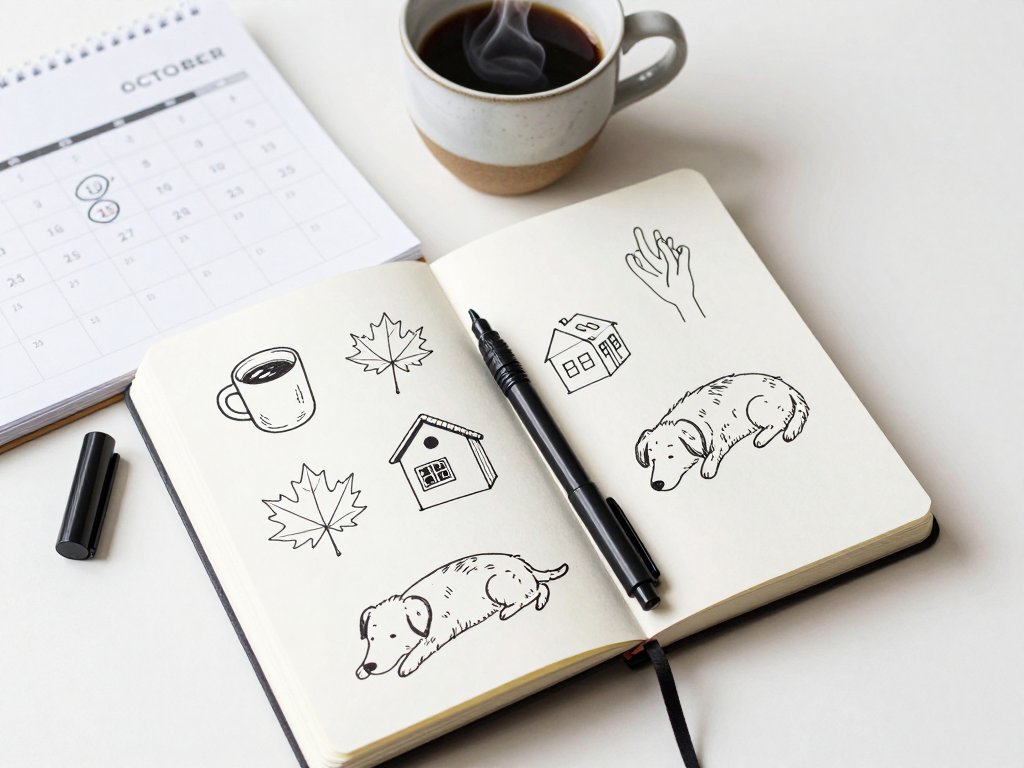
- A coffee mug
- A houseplant
- Your front door
- The dog (or the cat, or the goldfish)
- Your own hand in a comfortable pose
- The view from your kitchen window
- A child's toy left on the floor
Write your list on the inside cover of your sketchbook, or keep it in the notes app on your phone. When the prompt feels too hard, pick something from the list and draw it. No guilt, no negotiation — just a pen meeting paper.
One more trick: when a prompt stumps you, redraw an earlier drawing using a different technique. The mug you hatched on day two becomes a stippled mug on day nine. Same subject, new adventure, zero decision-making required.
Plan Your Month, Your Way
Set a Goal You Can Keep
Here is a secret the internet will not tell you: you do not have to draw every single day. Inktober is a framework, not a contract. Some people draw daily, some every other day, and some only on weekends. All of them are doing it right.
Decide your goal before October starts, and make it a goal you can actually keep. A realistic goal you meet feels like victory. A perfect goal you abandon feels like failure, and we do not need that kind of energy in our lives.
If you are new to this, consider aiming for every other day, or for five days a week. You can always draw more when the mood strikes. It is far better to exceed a gentle goal than to fall short of a brutal one.
Rest days are not weakness; they are part of the rhythm. Many artists find their best ideas come after a day away from the page. A skipped day can be a gift to the next drawing.
Choose Your Drawing Time
Once you know how often you will draw, decide when. Nap time works beautifully for parents of little ones. After dinner works if your evenings are quiet. A lunch break works if you work outside the home.
Put it on your calendar like an appointment with a friend — because that is exactly what it is.
If your schedule is unpredictable, anchor your drawing time to something that already happens daily — right after morning coffee, or while the pasta water boils. Attaching a new habit to an old one is the easiest way to make it stick.
You might also discover that some days the only window is ten minutes before bed. Take it. A quick sketch in pajamas counts just as much as a two-hour studio session, and it might be the most honest drawing of your whole month.
Decide How You Will Share
Sharing is part of Inktober's charm. The hashtag #Inktober is full of encouragement, and posting a drawing — even a wonky one — is an act of bravery that gets easier every single day.
But sharing is optional, and there are many ways to do it. Some people post every day. Others save their drawings and share a weekly roundup on Sunday nights. Many keep the whole month in a private sketchbook, and that is just as valid.
Ask yourself one honest question: would public posting energize me or exhaust me? Would comments feel like support or like pressure? Be truthful with yourself. The challenge is yours, and the only audience that truly matters is you.
When Life Gets in the Way
Life will interrupt. Kids get sick. Work gets loud. Some nights you will be simply too tired to hold a pen. This is normal, and it is not failure.
When a day slips away, you have two good options. You can skip and catch up tomorrow, doing two drawings in one sitting. Or you can skip guilt-free and pick up the next day as if nothing happened. Both are fine.
On the hardest days, shrink the task until it is laughably small: one two-minute sketch of your thumb, or a single leaf, or the corner of the room. Tiny drawings keep the streak alive without costing anything you do not have.
One missed day cannot erase the days you showed up. At the end of October, you will not count the gaps. You will flip through the pages you filled, and they will outnumber the empty ones by a mile.
A Simple First-Week Plan
If planning your own month feels overwhelming, borrow this gentle first-week plan. Swap in the official prompt word whenever it appeals to you more than the suggestion here.
- Day 1: your coffee mug, drawn with a simple contour line. Warm, familiar, and impossible to get wrong.
- Day 2: your houseplant, shaded with hatching. Notice where the light falls on the leaves.
- Day 3: whatever the official prompt word inspires — or your front door if it does not inspire anything.
- Day 4: a leaf from the yard, using stippling. This one is pure meditation.
- Day 5: your dog, or a well-loved stuffed animal, with cross-hatching for texture.
- Day 6: your own hand in a relaxed pose. Hands are hard; that is the point.
- Day 7: a tiny self-portrait, or a drawing of something that made you smile this week.
Notice what this week does not include: perfection, comparison, or long sessions. It includes showing up, looking closely, and letting ink do what ink does.
The first week is often the hardest, simply because everything is new. Hang in there. By week two, your hand will know what to do, and the daily drawing will start to feel like a treat.
After seven days, you will know what feels good and what does not. Adjust your goal, your schedule, or your subjects. October is yours to shape, and you can reshape it anytime you like.
Conclusion
When I think back to that blue spiral notebook, I do not remember the bad drawings. I remember the feeling of sitting down with it every day, the way October turned into a month of small, quiet victories.
Your October can be the same. Not because you will make gallery-worthy art, but because you will give yourself thirty-one days of showing up — and that is its own kind of masterpiece.
Whatever your October ends up looking like — thirty-one drawings or twelve, all posted or all private — it will be yours. And that is worth celebrating.
So gather your pens, warm up your hand, and get ready. October 1st is coming, and it is going to be wonderful.
Tell us in the comments: what is the first thing you plan to draw on October 1st — the coffee mug, the front door, or something else entirely?