Introduction
There is something quietly magical about reaching into a bag on a long car ride or a plane, pulling out a small project, and letting your hands work while your mind wanders. The analog bag trend — packing a dedicated craft kit for travel — has taken off in 2026, and for good reason. After years of screens filling every spare moment, many of us are rediscovering what it feels like to create something with our hands while we travel.
Whether you are heading to the beach for a week, driving to visit family for the holidays, or simply spending an afternoon at a coffee shop while the kids are at swimming lessons, an analog bag turns waiting time into making time. And the best part? You do not need much to get started. In fact, keeping the kit small and intentional is the whole point.
Here is exactly how to pack a screen-free craft kit that will keep you happily occupied without taking up your whole suitcase.
What Is the Analog Bag Trend?
The term "analog bag" emerged from the broader slow-living and hands-on creativity movements. Think of it as the opposite of doomscrolling: instead of pulling out your phone during idle moments, you pull out a small craft project. The bag itself can be anything — a zippered pouch, a canvas tote, a small cosmetic bag repurposed for yarn and needles. What matters is what is inside.
Social media platforms like TikTok and Instagram have fueled the trend, with creators showing off their perfectly packed kits: tiny embroidery hoops, mini skeins of yarn, pocket-sized watercolor sets. But do not let the curated videos fool you. The analog bag trend is deeply practical. It is about reclaiming small pockets of time and using them to create rather than consume.
Why Pack a Craft Kit for Travel?
Before we dive into the what-to-pack list, let us talk about why this is worth the effort. Travel is full of waiting: airport layovers, train delays, the forty-five minutes between checking into a hotel and heading out for dinner. These small windows of time add up. On a weeklong trip, you might have six to ten hours of idle time that could be spent making something.
Crafting while traveling also has a grounding effect. When you are in an unfamiliar place — a new city, a relative's guest room, a rental cottage — having a familiar project in your hands creates a sense of comfort and routine. Plus, you return home with something you made during your trip, which is far more satisfying than a phone full of photos you may never look at again.
The Golden Rules of Packing an Analog Bag
Sophie Bennett here, and if you know my writing, you know I love a good list. Packing a craft kit for travel is all about thoughtful editing. Here are the ground rules.
Rule 1: Keep It Small
Your craft kit should fit in a pouch no larger than a standard pencil case. If it does not fit, leave it behind. The goal is portability, not a full studio.
Rule 2: Choose a Project, Not a Hobby
Do not pack supplies for four different crafts. Pick one project — one that you can start and finish during the trip or at least make meaningful progress on. A single skein of yarn and a crochet hook. A small embroidery hoop with pre-transferred pattern. A pocket watercolor set and a tiny pad of paper.
Rule 3: Avoid Messy Materials
Travel is not the time for wet glue, loose glitter, or paints that require turpentine. Stick with dry, contained materials. Think about what you could comfortably do on an airplane tray table or in the passenger seat of a car.
Rule 4: Pack a Backup
If you finish your main project or it is not working out, having a small backup — a second color of thread, a different size hook, a mini coloring book and pencils — keeps the momentum going.
Rule 5: Bring a Small Trash Bag or Project Bag
Scraps, thread clippings, and yarn ends accumulate fast. A small zip-top bag or cloth pouch for waste keeps your workspace tidy and makes cleanup instant.
Best Crafts for Travel
Not every craft travels well. Here are the top recommendations for activities that are compact, clean, and satisfying in short bursts.
Embroidery and Cross-Stitch
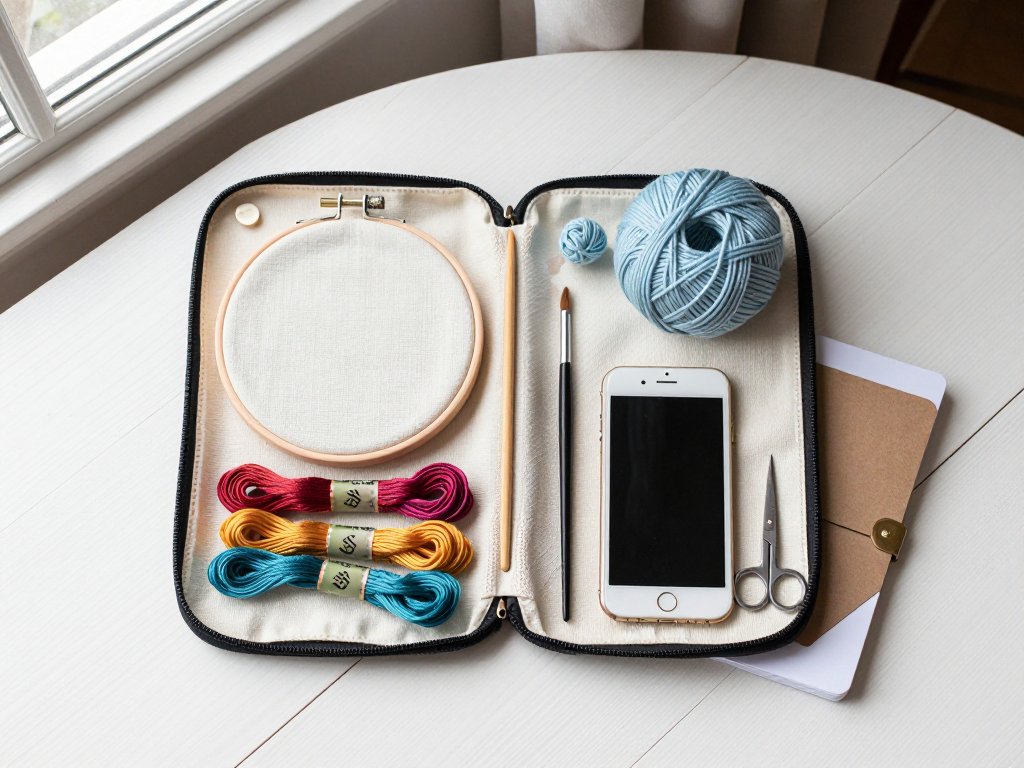
A small embroidery hoop, a few skeins of floss, a needle, and a pre-printed pattern are all you need. Cross-stitch kits are especially travel-friendly because the pattern is printed on the fabric, and the counting keeps your mind engaged without requiring constant reference to a phone or tablet. Choose patterns with fewer than six colors to keep your floss organization simple.
Crochet and Knitting
Small projects like washcloths, dish towels, hats, or baby booties travel beautifully. Choose a smooth, light-colored yarn that is easy to see in dim light — dark yarns are frustrating to work with on an airplane or in a dimly lit car. Bring a single skein and the corresponding hook or needles. Do not forget a small pair of travel scissors or a thread cutter pendant.
Pocket Watercolor Painting
A compact watercolor set (about the size of a phone), a water brush (the kind with a reservoir in the handle), and a small pad of watercolor paper create a complete travel studio. Paint scenes from your trip, quick landscapes, or abstract swatches. Water brushes eliminate the need for a water cup, making this an exceptionally clean travel option.
Coloring and Drawing
A small adult coloring book or a pocket sketchbook paired with a set of colored pencils or fine-liner pens is the ultimate low-mess travel craft. No spill risk, no sharp edges, and you can stop and start as often as you like. Look for coloring books with perforated pages so you can tear out and frame your finished pieces.
Paper Crafts: Origami and Zines
A small stack of origami paper and a diagram card is incredibly lightweight and endlessly engaging. If origami is not your style, try making a tiny zine: fold a single sheet of paper into an eight-page booklet and fill it with drawings, notes, or collage elements from your trip. All you need is paper, a pen, and a glue stick (the kind that twists up, no liquid).
Macrame and Knotting
A few lengths of cotton cord and a small pair of scissors let you make simple macrame bracelets, keychains, or plant hangers while you travel. The cord takes up almost no space, and basic knotting techniques like the square knot and half-hitch are easy to learn and meditative to repeat.
What to Pack in Your Analog Bag
Here is a complete packing checklist for your travel craft kit. Adjust based on your chosen project, but these essentials apply to almost any analog bag.
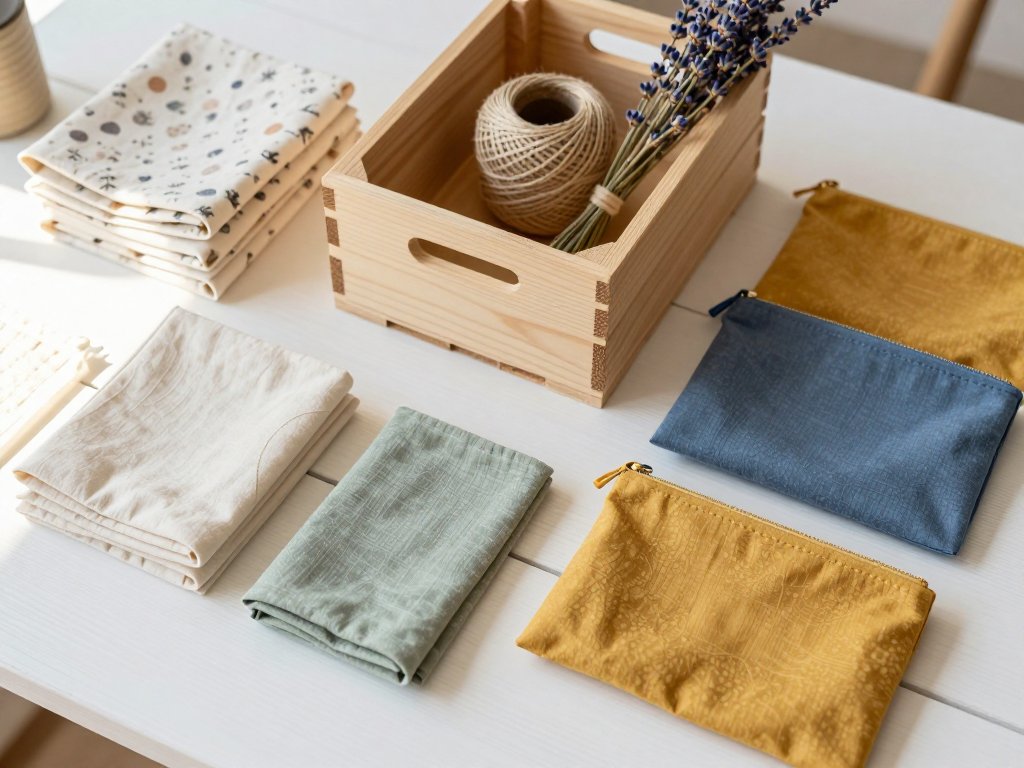
- A small pouch or bag: A zippered pencil case, makeup bag, or canvas drawstring pouch works perfectly.
- Your main project supplies: Whatever you need for the craft you chose — yarn and hook, embroidery hoop and floss, watercolor set and paper.
- A small pair of scissors: Travel-sized scissors with rounded tips or a thread cutter pendant. Check TSA rules if flying — scissors under four inches are generally allowed.
- A needle case or thread organizer: Keep needles, pins, and floss contained and easy to find. A felt needle book or a small pill organizer works well.
- A small measuring tape or ruler: Useful for checking gauge, measuring finished pieces, or squaring off paper.
- A backup project or extra material: An extra skein of yarn, a second color of embroidery floss, a small notebook.
- A small bag for scraps: A zip-top bag or cloth pouch for waste keeps your space clean.
- A headlamp or book light: Crafting in dim hotel rooms or on evening flights is much easier with a small directional light.
- A pattern or instructions: Printed or memorized. Do not rely on your phone for pattern access — the whole point is screen-free.
- Sticky notes and a pen: For jotting down modifications, counting rows, or marking your place in a pattern.
What to Leave at Home
Just as important as what goes in is what stays behind. Leave these items out of your travel craft kit to keep it portable, clean, and stress-free.
- Wet glue or any liquid adhesive — spills happen, and they are hard to clean on the go.
- Loose glitter or fine powders — they get everywhere and cannot be contained in a moving vehicle.
- Large projects — a king-size blanket is not a travel project. Save those for your living room couch.
- Projects requiring frequent ironing or pressing — you will not have an ironing board handy.
- Anything fragile or messy — if it would be stressful to clean up in a hotel bathroom, leave it home.
- Projects that require a reference screen — if you need a video tutorial on loop, it is not a screen-free project.
Setting Up for Success on the Go
Once your analog bag is packed, a few small habits will make your travel crafting smoother.
First, organize your supplies before you pack them. Wind yarn into center-pull balls so they do not tangle. Pre-thread a few needles with your main colors. Cut lengths of embroidery floss to working size. The less fussing you need to do on the road, the more you will actually craft.
Second, set realistic expectations. Travel crafting is about the process, not the product. You may not finish your project on the trip, and that is perfectly fine. The joy is in the doing — the quiet minutes spent stitching while your kids nap in the back seat, the way a row of knitting calms travel anxiety, the satisfaction of making something instead of scrolling.
Third, pack your analog bag where you can reach it easily. Do not bury it in your checked luggage or the bottom of your suitcase. Keep it in your carry-on, your purse, or the seat-back pocket. The easier it is to grab, the more you will use it.
Analog Bag Ideas by Trip Type
Different trips call for different craft kits. Here is how to tailor your analog bag to your destination and travel style.
Air Travel
TSA-friendly supplies only. Small scissors under four inches, nothing liquid over three ounces. Embroidery, crochet, knitting (with wooden or bamboo needles to avoid security questions), and pocket watercolors all work well. Keep your kit in your personal item so you can access it during the flight without rummaging through the overhead bin.
Road Trip with Kids
Choose projects that are easy to stop and start. Crochet and knitting are excellent because you can put them down mid-row. Bring a small clip-on light for evening driving. Also pack a separate craft kit for the kids — coloring books, sticker books, or simple weaving looms — so everyone can craft together.
Beach Vacation
Salt, sand, and sun are hard on craft supplies. Stick with simple projects: embroidery with synthetic floss (less prone to fading), crochet with cotton yarn, or a sketchbook and pencil. Keep everything in a zip-top bag to protect it from sand and moisture. Rinse your hands before handling any project that needs to stay clean.
Visit to Family
Family visits often involve lots of sitting around — catching up, watching movies, waiting for holiday meals. This is the perfect setting for a slightly larger project. Bring something you can work on while chatting, like a cross-stitch pattern or a crochet blanket square. The project becomes a conversation starter, and your relatives will love seeing your progress.
Camping or Cabin Trip
Outdoor crafting is a delight, but it requires some forethought. Choose sturdy materials: cotton and wool over delicate silk or metallic threads. Avoid paper projects in damp environments. A small whittling kit (with proper safety tools), finger knitting with chunky yarn, or a simple leather stamping project are wonderful options for outdoor analog bags.
Crafting in Public: A Few Tips
If you are new to crafting in public places, it can feel a little awkward at first. Here is what I have learned from years of stitching in airports, cafes, and waiting rooms.
Start with a simple, repetitive project. Complex patterns that require constant counting or pattern checks are harder to do in a distracting environment. A simple stockinette stitch scarf, a monochrome embroidery pattern, or a repeating origami fold are ideal for public crafting.
Wear your project bag cross-body or keep it on your lap to avoid taking up too much space on a crowded table or tray. Be mindful of your neighbors on a plane — keep your elbows in and avoid sudden movements with needles or scissors.
Most of all, do not worry about what anyone thinks. I have had some of my most meaningful conversations start because someone asked what I was making. Crafting in public is a quiet invitation for connection, and in our screen-filled world, that is a rare and beautiful thing.
The Deeper Why: Why Analog Bags Matter in 2026
The analog bag trend is not just about having something to do with your hands. It reflects a larger cultural shift toward intentional, screen-free living. In a world where every moment of downtime feels like it should be filled with a notification, a video, or a message, choosing to craft instead is a small act of resistance.
There is also something deeply satisfying about completing a project that you worked on across different places — a scarf that was started on a plane, continued in a hotel lobby, and finished on the drive home. That object holds the memory of the trip in a way a photo never can. Every stitch or brushstroke is tied to a specific moment, a specific place, a specific feeling.
The analog bag trend gives us permission to be slow, to be present, and to make something with our own two hands. And really, is there a better souvenir than that?
Conclusion
Packing an analog bag is one of the simplest things you can do to make your travels more creative, more peaceful, and more memorable. You do not need a lot of supplies, a lot of skill, or a lot of time. You just need a small pouch, a single project, and the willingness to put down your phone and pick up something that brings you joy.
Whether you are a seasoned crafter or someone who has not made anything since elementary school art class, the analog bag trend is for you. It is forgiving, portable, and deeply rewarding. So the next time you pack for a trip, leave a little room in your bag for creativity. You may be surprised at how much it changes the way you travel.
Happy stitching, and safe travels.