Introduction
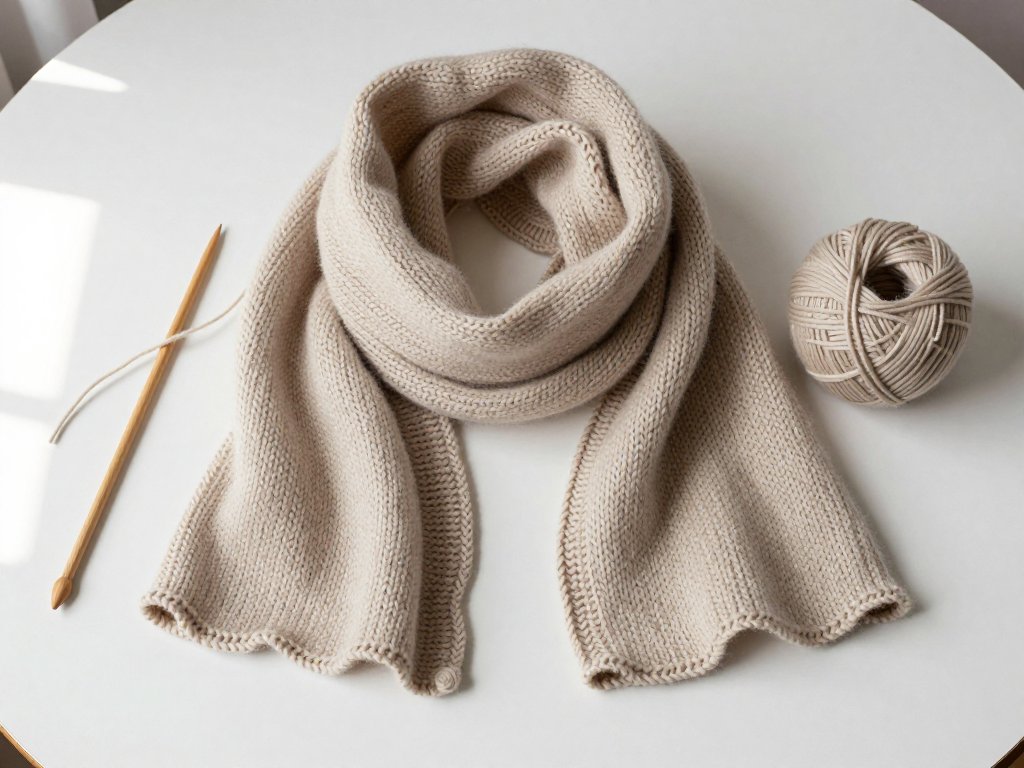
There is a scarf in every good yarn shop that looks unlike anything else on the shelf. Thick as a folded blanket, soft as a fresh loaf, with deep ribs in two colors that seem to have grown together rather than been knitted.
That fabric is brioche. It is not difficult the way cable work is difficult. It is difficult the way a foreign language is difficult at first — the grammar is unfamiliar, and then one day a sentence simply arrives whole.
This is a patient guide to the two-color form. We will cover what the cloth actually is, where the name came from, the three stitches worth naming, and the smallest possible first project.
You will not master it in an evening. You do not need to. Brioche rewards the knitter who is willing to be a beginner for a fortnight.
What Brioche Fabric Actually Is
Brioche is a ribbed, deeply cushioned cloth built from tuck stitches paired with yarn overs. Every working stitch carries a companion loop of yarn draped over it, and on the next pass you work the two together as one.
That pairing is the whole secret. The fabric ends up with a hollow, sandwich-like structure — two layers of loops with air trapped between them. It is thicker than ordinary ribbing at the same gauge, and markedly softer.
Plain ribbing pulls in and springs back. Brioche does that too, but with a rounded, pillowed face. Run a hand across it and the ribs feel like cords under a quilt rather than folds in a cloth.
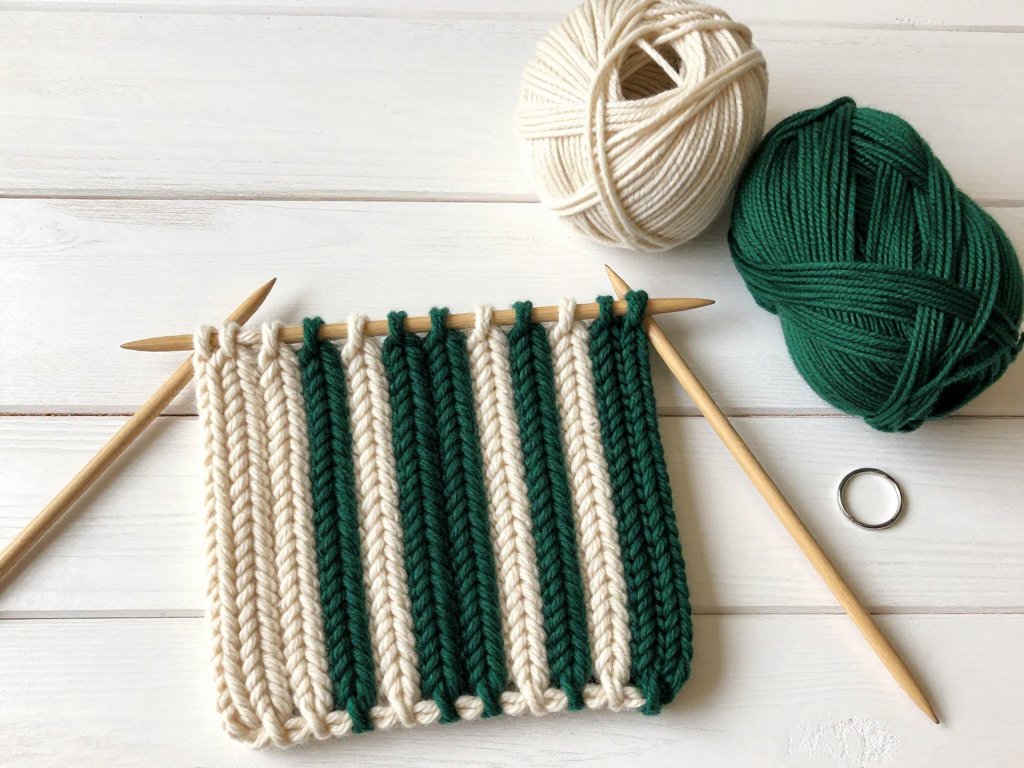
In one color, brioche is fully reversible. Both faces are identical, which is why it suits scarves so well. In two colors, the fabric is not reversible but two-sided: each face shows one color's columns against the other's ground.
It also eats yarn. A brioche scarf of a given size can take a third more yarn than a plain ribbed scarf, and sometimes closer to half. Buy the extra skein at the start, from the same dye lot, while it still exists.
A Short and Honest History
Brioche knitting has the sort of history that resists tidy dates, which is part of its charm. What follows is what can be said with reasonable confidence, and no more than that.
The Pastry Name
The name is usually traced to the French pastry. Both the bread and the fabric are puffed, raised, and layered, and the comparison was apparently too good to resist. The pastry's own name comes from an old verb for kneading.
Whether a French knitter borrowed the word first, or an English one borrowed it second-hand, is not clear. What matters is that the metaphor stuck because the fabric genuinely looks leavened.
What the Old Manuals Show
Needlework manuals from the nineteenth century show a family of tuck and slip-stitch patterns that work on exactly this principle: a stitch held, a yarn over made, the pair worked together later.
British pattern books often print a close relative under the name patent stitch. Fisherman's rib is a cousin too, worked into the row below rather than through a yarn over, and it produces a similar spring.
None of these are brioche as we now name it. They are the same idea in different dialects, and reading an old manual is a good cure for the belief that any technique has a single inventor.
A Twentieth-Century Refinement
The two-color form was refined and popularized across the twentieth century, as knitters worked out how to let one color rest while the other passed. The English-language brioche tradition owes a great deal to teachers who wrote it down clearly.
Nancy Marchant is often credited with bringing two-color brioche to a wide English-speaking audience from the 1990s onward, and with giving its vocabulary its present shape. The revival of the last two decades followed from that work.
Today the technique sits comfortably between traditional and modern. It is old enough to have provenance and young enough that dyers still bring new palettes to it every season.
The Three Stitches Worth Knowing
You can read a great deal of brioche with three abbreviations. Learn these as words rather than codes, and most patterns stop looking like algebra.
brk — Brioche Knit
Brioche knit means: knit the next stitch together with the yarn over that sits with it. One movement, two loops consumed. The result is a plump knit column that stands forward from the fabric.
This is the stitch that gives brioche its raised face. When a pattern says brk across the row, it is asking for a row of those columns, one after another.
brp — Brioche Purl
Brioche purl means: purl the next stitch together with its yarn over. Same pairing, opposite direction. The column recedes instead of standing forward, which is what makes the rib.
Alternating brk and brp is what turns a soft mat of loops into a ribbed cloth with real architecture. In two-color work, each face uses one of these far more than the other.
sl1yo — Slip One With a Yarn Over
Slip one with a yarn over: slip the next stitch purlwise, then bring the yarn over the needle so the new loop sits beside the slipped stitch. Nothing is knitted. The stitch is simply parked, wearing a scarf.
This is the pause that makes two colors possible. When you slip a stitch in one color, the other color can pass over it later, and the two never actually trade places.
Sl1yo is also where beginners lose their place. The yarn over must be generous — loose enough to sit as a full loop, not a tight thread hugging the needle.
Why Brioche Feels Strange at First
The first inch of brioche feels wrong to almost everyone. Your hands expect to knit a stitch and move on. Brioche asks you to knit a stitch and its shadow, and to leave some stitches alone entirely.
The yarn over rides with the slipped stitch. It does not sit on its own somewhere in the row; it travels with its partner, waiting. On the next pass, you knit the pair together as a single unit.
This is why brioche grows twice as tall per row as it looks. Each visible ridge of fabric costs two passes of the needles — one to slip and wrap, one to work the pairs.
It is also why your stitch count seems to double and then halve. It does. Nothing is wrong. The yarn overs are not extra stitches; they are half-finished ones.
Give the first few inches permission to look lumpy. Tension in brioche is a matter of letting the yarn over breathe, and that instinct arrives in the hands, not the head.
Setting Up in Two Colors
Two-color brioche is worked in passes rather than rows. Cast on an even number of stitches, work a setup row to establish the pattern, and then alternate colors every two rows.
In practice that means one color works what brioche knitters call the bark pass — the knit face — and the other works the burp pass, the purl face. The names are homely and they stick because they are easy to shout across a table.
On any given pass, each color works only its own stitches and slips the other color's stitches with a yarn over. A cream column is never knitted in green. It is wrapped, parked, and left for the cream pass to collect.
That is how the two colored columns form. Every stitch belongs to exactly one color, permanently, and the other color simply travels past it. The vertical lines you admire are not painted on; they are separate families of stitches taking turns.
Why the Wrong Side Is Not Wrong
Turn two-color brioche over and you will find a finished fabric, not a hidden one. The colors swap roles: what was ground becomes rib, what was rib becomes ground.
Both faces are presentable. A scarf in two-color brioche can be worn either way up, and many knitters treat the two faces as two different designs rather than a front and a back.
Choosing Yarn and Needles
Brioche is a forgiving stitch in some ways and a merciless one in others. It hides small tension variations beautifully. It also magnifies everything about the yarn.
Choose a smooth, plied yarn in a solid or tonal color. The ply gives the ribs a clean edge, and a single colorway lets the architecture read. Variegated yarn muddles the ribs into a pleasant blur with no structure.
Save the halo yarns — mohair, brushed alpaca, anything fuzzy — for your second or third project. They feel wonderful in brioche and they hide the stitches you are still learning to see.
Go up one or two needle sizes from what the yarn label suggests. The fabric should feel loose and airy in the hand, almost too open. It will settle and fill in when washed.
Circular needles are the practical choice, even when working flat, because the weight of the fabric has somewhere to sit. Choose a set with two differently colored tips so you can tell at a glance which end is which.
Gauge, Swatching, and a Swatch That Lies
Every knitter is told to swatch. In brioche, the advice is not optional, because a brioche swatch actively lies to you until it has been washed.
Work a swatch at least six inches square in your intended yarn and colors. Measure it relaxed, on the table, without stretching. Write the numbers down, including how many ridges you have.
Then wash it the way you will wash the finished piece, and lay it flat to dry. Measure again when it is completely dry. This is the only measurement that matters.
Expect vertical growth. Brioche relaxes in water and the ribs lengthen, sometimes by ten or fifteen percent, occasionally more. Expect the width to draw in slightly as the ribs settle.
Plan your project from the washed numbers. If you knit a scarf to the length you want before blocking, you will finish with a scarf that hangs to your knees and a lesson you will not forget.
The Mistake Everyone Makes: A Lost Yarn Over
If you make one error in brioche, it will be this one. A yarn over goes missing — slipped off, worked by accident, or simply never made — and a whole column begins to unravel.
You will see it as a running gap, a thin place in the fabric, or a stitch that has shrunk to half its size. Unlike a dropped stitch in stockinette, it travels fast and takes the column with it.
The fix is patient and entirely doable. It is the same repair you already know, performed on a stitch that has a companion loop, which is why it feels unfamiliar rather than difficult.
Keep a Lifeline
Thread a smooth contrast yarn through the live stitches on your needle every ten rows. Use a blunt tapestry needle and pass it through each stitch together with its yarn over.
It takes two minutes and it buys you a safe place to retreat to. When something goes badly wrong, you pull back to the lifeline and lose ten rows instead of an evening.
Laddering Back Up
To repair a lost yarn over, let the column drop deliberately to a point below the error, then rebuild it upward with a crochet hook. Work one column at a time, not several at once.
At each rung, catch the strand that belongs to that column and pull it through as a loop. Check as you go: every rebuilt stitch should have its yarn over sitting beside it.
Count when you finish. The stitch count on the needle is your proof that the column is sound, and it is quicker to count than to doubt.
Your First Project: A Headband or a Small Cowl
Do not begin with a scarf. Begin with something small enough to finish before your patience runs out, and large enough to teach you the rhythm.
A two-color brioche headband is ideal — roughly four inches wide and long enough to meet around the head with a little ease. A small cowl, worked flat and seamed, is the other good first choice.
Work it flat if you are comfortable with purling back, or in the round if you already know how to join and work circularly. Both are legitimate first attempts; flat is slower but easier to read.
Cast on an even number of stitches, work a setup row, then alternate your two colors every two rows until the piece is a few inches deep. Keep the edges tidy by slipping the first stitch of each pass.
Bind off loosely — deliberately, almost carelessly loose, or with a needle two sizes larger. A tight bind-off will strangle a brioche edge and ruin the drape you worked for.
Seam the ends with a simple mattress stitch, matching the rib lines so the join disappears into the pattern. Then block it. The headband will look homemade until it is wet, and finished afterward.
Blocking and Care
Brioche grows when washed and blocked. This is not a flaw; it is part of the finishing. The fabric relaxes, the ribs even out, and the whole piece becomes what it was meant to be.
Wash in cool water with a gentle wool wash and very little agitation. Let it soak, then lift it out supporting the weight with both hands. Wet brioche is heavier than it looks.
Spin, do not wring. A short spin in the machine or a firm press between towels will remove most of the water. Never twist the fabric, and never lift it by one corner.
Lay it flat, shape it to your measurements, and leave it alone until it is completely dry. Do not hang a wet brioche garment — the weight will pull the ribs into a permanently stretched shape.
Store finished brioche folded, not on a hanger, for the same reason. Folded, it will keep its spring for years.
Troubleshooting the Common Snags
Most brioche problems announce themselves early and repay attention. Here are the five that arrive first, and what each one is telling you.
A Yarn Over Disappeared
You will see a thin place or a shrunken stitch where a full pair should be. Stop and repair it before working further, or the gap will travel down the whole column and take an hour to fix.
A Column Twisted
This usually means a slipped stitch was pulled tight around the needle, or two stitches crossed at a color change. Drop the column back a few rungs and re-seat each loop in order.
The Fabric Pulls In Too Tightly
Tight brioche comes from small yarn overs and a slipped stitch held under tension. Relax your grip, make the yarn over a true loop, and consider going up another needle size.
The Boundary Between Colors Wobbles
A wavy edge between color columns is a dominance problem. Keep the order of your two yarns consistent at every color change, and do not tug the first stitch after turning.
The Piece Came Out Much Bigger Than Planned
It relaxed more than your swatch predicted, or the swatch was measured before washing. Treat the piece as a very good swatch and recalculate from its blocked measurements.
A Stitch You Learn in the Hands
Brioche cannot really be taught from a page. A page can name the stitches, warn you about the yarn over, and describe the shape of a headband. The rhythm has to be earned at the needles.
That is not a discouragement. It is an invitation to stop reading sooner than feels comfortable. Read the three stitch names once more, cast on twenty stitches, and let the first six rows be ugly.
The day it clicks, it will click in your fingers rather than your understanding. You will feel the yarn over waiting, and you will knit it with its partner without thinking about the words at all.
And if you find yourself craving color patterns with floats and charts instead, that is a different and equally lovely road — our guide to Fair Isle knitting and stranded colorwork walks it patiently.
For now, keep the work small, keep the lifeline in, and keep the swatch honest. Brioche is an old technique with a pastry's name, and it has been waiting a long time for your hands to catch up.