Introduction
Every craft has a story. Some stories stretch back centuries, passed from hand to hand through kitchens, workshops, and village halls. Yet many of these skills came close to vanishing in the last hundred years, crowded out by factories, plastic, and the sheer speed of modern life.
Here is the hopeful part: a quiet revival is happening. People are picking up worn tools again, learning from grandparents and online teachers alike, and discovering the deep satisfaction of making something useful with their own hands.
This guide introduces eight endangered crafts that are finding a new generation of makers. For each one, I will share a little of its history, what makes it special, and how you can try it yourself — even with a busy schedule and a modest budget.
You may find yourself falling in love with one of them. That is exactly how revivals begin.
Why Crafts Disappear — and Why They Come Back
Skills rarely vanish because people stop wanting beautiful things. They vanish because the economics change. When a machine can weave a basket in seconds, the hand weaver's slower rhythm looks impractical.
But practicality is not the whole story. Handmade objects carry meaning that machines cannot copy. A basket that took three hours to make holds the maker's care in every strand. That meaning is what draws people back.
Revivals usually start small. One potter learns to throw clay from a great-aunt. One teacher brings a loom into a classroom. One online video of a chair caner at work gathers a million views. Then the skill spreads again, person by person.
In recent years, interest in heritage crafts has grown steadily, driven by the slow-living movement, the handmade revival, and a desire to own fewer, better things.
Many of these crafts are now taught in workshops, celebrated in museums, and even recognized by heritage organizations that track which skills are at risk.
Organizations in several countries now maintain lists of endangered crafts, much like endangered species lists.
When a skill is added to one of these registers, it often sparks renewed attention — new classes, new books, and a new wave of curious beginners.
That attention is exactly what keeps a craft alive.
1. Tambour Lace
Tambour work is a delicate form of embroidery that uses a tiny hook, not a needle, to pull chains of thread through fabric stretched taut in a frame. It reached its height in eighteenth-century France, where it adorned gowns, fans, and court dress.
The name comes from the French word for drum, because the round frame the fabric is stretched over resembles one. Tambour lace fell out of fashion as machine-made netting became cheap in the nineteenth century, and the hand technique nearly disappeared.
Today, tambour work is enjoying a remarkable comeback, especially in fashion houses that prize hand-finishing. The technique is easier to learn than it looks — the hook does most of the work once your hands find the rhythm.
To try it, you need a small tambour frame, fine thread, and a tiny hooked needle called an aiguille.
Many crafters begin with a simple chain stitch along a drawn line. If you already enjoy embroidery, you will feel at home quickly.
For more stitch inspiration, explore our guide to embroidering flowers on clothing or framing embroidery as wall art.
2. Willow Basketry
Baskets are among the oldest human-made objects. Willow basketry — weaving flexible shoots into containers — was practiced across Europe for thousands of years, and every region developed its own shapes and weaves.
At its peak, whole villages depended on basket making. Then came plastic crates and cardboard boxes, and the trade shrank almost overnight. By the late twentieth century, professional basket makers in many countries could be counted in the hundreds rather than the thousands.
The revival has been heartening. Farmers' markets, interior design, and a growing distaste for single-use plastic have all brought baskets back into demand. Willow is also wonderfully sustainable — it regrows every year.
Beginners usually start with a simple round base and a plain weave, using soaked willow rods that bend easily. A first basket may be wobbly and wonderful. Classes are widely available, and a small bundle of willow costs very little.
3. Spoon Carving
Before metal cutlery was common, everyone carried a spoon. In Scandinavia, carving spoons was a daily skill, practiced by the fire in winter. The finished spoons were practical, personal, and often beautiful enough to be treasured for generations.
Spoon carving nearly faded as factory-made cutlery spread. But in the last two decades, it has become one of the most popular gateway crafts in the green-woodworking revival. The tools are few, the learning curve is gentle, and the result is something you use every day.
All you need is a piece of green (freshly cut) wood, a carving knife, and a hook knife for the bowl. You can learn the basic strokes in an afternoon. The first spoon usually takes a few evenings; the twentieth takes one.
Carvers often describe the craft as meditative. There is something deeply grounding about shaping wood with your own hands, watching a rough branch become a smooth, useful object.
4. Rag Rug Making
Rag rugs were born of thrift. Generations of homemakers saved worn-out clothing, cut it into strips, and hooked, braided, or wove those strips into sturdy floor coverings. Nothing was wasted.
The craft was once so common that almost every home had a rag rug somewhere. As wall-to-wall carpeting became affordable, the old rugs were rolled up and the skills set aside. For decades, rag rug making was kept alive mainly in pockets of Appalachia, Scandinavia, and the UK.
Today it is thriving again, powered by the mending and slow-craft movements. Rag rugs are also wonderfully forgiving for beginners — the techniques are simple, and mistakes simply become part of the rug's character.
You can start with a small hooked rug on a simple frame, using fabric strips cut from old shirts and sheets. It is a perfect project for evenings, and it turns a bag of cast-off fabric into something warm and lasting.
5. Chair Caning
Chair caning — weaving rattan strands across a seat — was once a thriving trade. Every town had a caner who could restore a worn dining chair, and the skill was passed down through generations of craftspeople.
The arrival of cheap replacement seats and foam cushions ended most of that trade. Chair caning became one of the most endangered crafts in many countries, kept alive by a small circle of specialists.
Interest has grown again as people repair rather than replace, and as vintage furniture finds new homes. Restoring a thrifted chair with fresh caning is deeply satisfying, and it can save a beautiful piece from the landfill.
Beginners can learn the basic seven-step weave from kits and online tutorials. The work is rhythmic and precise, and the finished seat is surprisingly strong. Many caners say their first chair took a weekend — and their second took an afternoon.
6. Natural Dyeing
For most of human history, color came from plants, insects, and minerals. Onion skins made warm golds, walnut hulls made rich browns, and madder root made the red of traditional Turkish carpets.
Synthetic dyes replaced natural ones in the mid-nineteenth century, and the old knowledge faded fast. But natural dyeing has seen a powerful resurgence, driven by interest in sustainable fashion and a fascination with the alchemy of color.
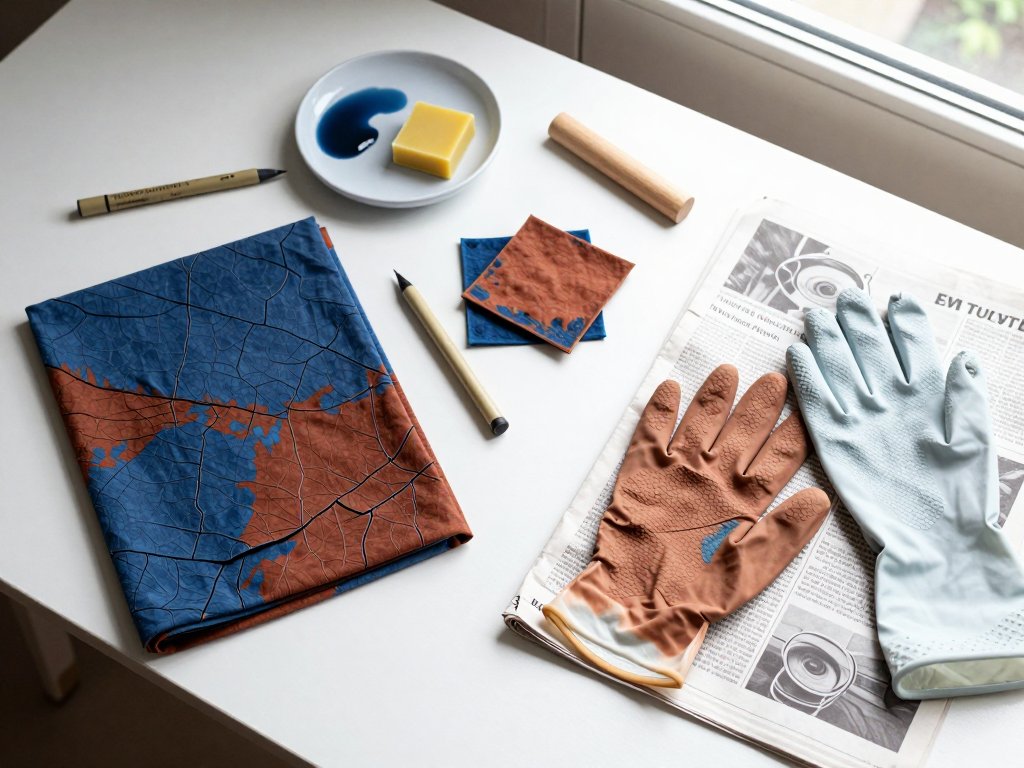
The craft is accessible in a way few others are. You can start with materials from your kitchen — onion skins, avocado pits, tea, and coffee all yield lovely shades. A basic dye pot, some cotton or wool, and a few mordants are all you need.
There is genuine magic in watching plain fabric emerge from the pot transformed. And because every batch of plants differs, no two dyed pieces are ever quite alike. It is a craft of patience, observation, and happy surprises.
7. Corn Dollies
Corn dollies are woven figures made from the last sheaves of the harvest. The tradition stretches back to pagan times, when farmers believed the spirit of the corn lived in the final stalks and must be preserved through winter.
By the early twentieth century, combine harvesters made the old hand-cut sheaves obsolete, and the craft nearly died with them. A few enthusiasts kept it alive, and today corn dolly making is taught at agricultural shows and craft fairs across Europe.
The basic materials are wonderfully humble: long straw stems, soaked until flexible, then twisted and woven into spirals, bells, and figures. Beginners often start with a simple spiral or a small heart.
It is a quiet, rhythmic craft that connects you to thousands of years of harvest tradition. And a hand-woven corn dolly makes a unique seasonal decoration or gift.
8. Wax Sealing
Wax sealing is one of the oldest crafts on this list — and one of the most surprising revivals of recent years. For centuries, melted wax and a carved stamp were how letters were closed and verified. The practice faded as adhesive envelopes took over in the 1800s.
Now, a love of handwritten letters and vintage stationery has brought wax seals back. Calligraphers, pen pals, and wedding planners have embraced them, and modern wax beads and glue-gun refills make the craft easier than ever.
It is also one of the quickest heritage crafts to learn. With a candle, a spoon, and a brass stamp, you can make a beautiful seal in about two minutes. There is a reason this craft has endured for a thousand years.
If you would like to try it, we have a full beginner's guide to wax sealing with vintage flair — including how to choose wax, press a clean seal, and fix common mistakes.
How to Choose Your First Heritage Craft
With eight crafts calling your name, how do you choose? Start with what you already love. If you enjoy needlework, tambour work will feel natural. If you love working with wood or spending time outdoors, spoon carving may be your match.
Consider your space and schedule, too. Wax sealing and rag rug making fit easily into small homes and busy evenings. Basket weaving and chair caning need a little more room and patience.
Budget matters as well. Onion-skin dyeing and corn dollies can start with things you already have. Spoon carving needs a decent knife, and tambour work needs a frame and hook, but none of these are expensive.
Finally, think about what you want from the craft. Do you crave calm and rhythm? Almost any of these will deliver. Do you want something useful at the end? Spoons, rugs, and dyed fabric give you that every time.
Where to Learn More
Heritage crafts are best learned from living teachers. Search for local guilds, craft centers, and museum workshops in your area — many offer one-day taster classes that are perfect for beginners.
Online, you will find generous communities for every craft on this list. Watch a few videos before you buy supplies; you will learn what tools you truly need and which mistakes to avoid.
Libraries are another wonderful resource. Older craft books, often out of print but available through interlibrary loan, contain techniques that online tutorials skip. There is something special about learning from the same pages a maker used fifty years ago.
And do not forget the people around you. A grandparent, neighbor, or church member may hold a skill you never knew about. Asking them to show you is a gift to both of you — and it is how revivals have always started.
Conclusion
These eight crafts survived because people loved them enough to keep the knowledge alive, even in the lean years. Now they are passing into new hands — perhaps yours.
You do not need to master a craft to honor it. Trying one basket, one spoon, one seal is enough. Every time you learn a heritage skill, you become part of its story, and you help make sure it is not lost.
Choose one craft from this list and give it a single evening this week. Let the rhythm of the work slow you down. See what your hands can make.
Who knows? A hundred years from now, someone might be learning the very skill you picked up this week — and telling the story of how it came back.