Introduction
There is something quietly revolutionary about setting down your phone and picking up a pair of knitting needles.
In a world that seems designed to keep our eyes glued to glowing screens—endless feeds, notifications pulling us in every direction—a growing number of young adults are choosing to step away.
Instead of scrolling, they are stitching. Instead of swiping, they are crocheting. And they are doing it with the help of something surprisingly old-fashioned: the fiber craft kit.
If you have noticed more conversations about yarn bombs on your social media feed, or spotted a friend proudly displaying a lopsided first scarf on their Instagram story, you are not imagining things.
Fiber crafts—knitting, crochet, embroidery, weaving, and macramé—are enjoying a remarkable resurgence among Gen Z. According to Google Trends data from 2024 and 2025, searches for "knitting for beginners" and "crochet kit" hit five-year highs, and platforms like TikTok have fueled the trend with millions of videos tagged #knitting and #crochet.
Craft kit sales across major online retailers have climbed steadily, with many sellers noting that their core demographic has shifted noticeably younger over the past three years.
This article explores how fiber craft kits are helping Gen Z replace doomscrolling with the tangible, therapeutic act of making.
We will look at the cultural forces behind this shift, the science of why crafting calms the anxious mind, and how you can join the movement—even if you have never held a crochet hook in your life.
A Very Brief History of Making by Hand
To understand why fiber crafts resonate so deeply right now, it helps to know where they come from.
Hand knitting dates back at least to the eleventh century, with the earliest known knitted fragments discovered in Egypt.
Crochet emerged more recently, developing in Europe during the early nineteenth century as an accessible way for women to create delicate lace without the expense of bobbin lace tools.
Embroidery has roots stretching back to ancient China and the Byzantine Empire. These crafts were never merely hobbies.
They were essential domestic skills passed down through generations, a quiet form of women's work that clothed families, decorated homes, and preserved cultural traditions.
By the mid-twentieth century, the rise of machine-made textiles and affordable ready-to-wear clothing began to push handcraft aside.
Knitting and crochet were increasingly viewed as old-fashioned, the domain of grandmothers rather than young women.
The feminist movement of the 1960s and 1970s further complicated the picture—reclaiming craft as a valid artistic expression while also rejecting the domestic roles it had been associated with.
For decades, fiber crafts existed in a kind of cultural limbo, practiced quietly by dedicated enthusiasts but rarely celebrated in the mainstream.
That began to change in the early 2000s with the rise of the "indie craft" movement, online marketplaces like Etsy, and the democratization of craft patterns through blogs and YouTube tutorials.
But the real explosion happened with the arrival of TikTok and Instagram Reels. Short-form video proved to be the perfect medium for demonstrating stitches in real time, and watching a row of neat single crochet appear under someone's fingers turned out to be surprisingly hypnotic.
By 2023, #KnittingTok had accumulated over five billion views on TikTok. What was once dismissed as a grandma hobby had become genuinely cool.
Why Gen Z Is Choosing Yarn Over Screens
The term "doomscrolling" entered our vocabulary around 2020, and it has only become more relevant since.
It describes the habit of consuming an endless stream of negative news and social media content, often late at night, unable to look away despite feeling worse with every swipe.
If that sounds familiar, you are far from alone. Studies published in the Journal of Behavioral Addictions have linked doomscrolling to increased anxiety, depression, and disrupted sleep patterns, particularly among younger adults who spend an average of over six hours per day on their phones.
Fiber crafts offer a compelling antidote. The repetitive motion of knitting or crocheting activates what neuroscientists call the "relaxation response"—the same calming mechanism triggered by deep breathing or meditation.
Each stitch requires just enough focus to anchor your attention in the present moment, but not so much that it feels mentally taxing.
This "flow state" is deeply restorative. When you are counting stitches, you are not worrying about tomorrow's deadlines or replaying yesterday's awkward conversation.
You are simply here, with the yarn, making something.
A 2022 survey by the Craft Yarn Council found that 89% of knitters and crocheters reported feeling less stressed after a crafting session.
Among respondents aged eighteen to thirty-five, the number was even higher. Many described their craft time as "sacred"—a non-negotiable part of their day that helped them feel grounded in a chaotic world.
The act of making something tangible also provides a sense of accomplishment that scrolling simply cannot match.
Finishing a row, completing a square, or binding off a finished piece gives you visible, physical proof that you spent your time well.
That feeling is addictive in the best possible way.
What Makes a Fiber Craft Kit Special
For a beginner, the prospect of starting a new craft can be intimidating. Which yarn should you buy?
What size needles does that pattern call for? How do you even hold the hook?
An embroidery store can feel overwhelming when you are not sure what you need. This is where the fiber craft kit shines.
A well-designed kit takes all the guesswork out of starting a new project. It includes everything you need—yarn or thread, needles or hooks, a pattern, and sometimes even stitch markers, darning needles, and a project bag—all curated by someone who knows exactly what a beginner requires.
The beauty of a kit is that it removes the friction of starting. You do not need to research supplies or make a separate trip to the craft store.
You open the box, and you are ready to go. For busy Gen Z consumers juggling work, school, and social lives, that convenience is invaluable.
According to a 2024 report by market research firm Technavio, the global craft kit market is expected to grow by over $2 billion between 2024 and 2028, driven largely by demand from first-time crafters aged eighteen to thirty-four.
Kits also solve the problem of commitment. A single kit costs a fraction of what you might spend stocking an entire craft cupboard, and it produces one specific project—a scarf, a stuffed animal, a set of coasters.
If you enjoy the process, you can invest in more supplies later. If you do not, you have not lost much.
This low-risk entry point is exactly what makes kits so effective at converting curious onlookers into lifelong makers.
Popular Fiber Craft Kits for Beginners
The variety of fiber craft kits available today is remarkable. Here are some of the most popular categories, each offering a different entry point into the world of handmade creation.
Knitting Kits
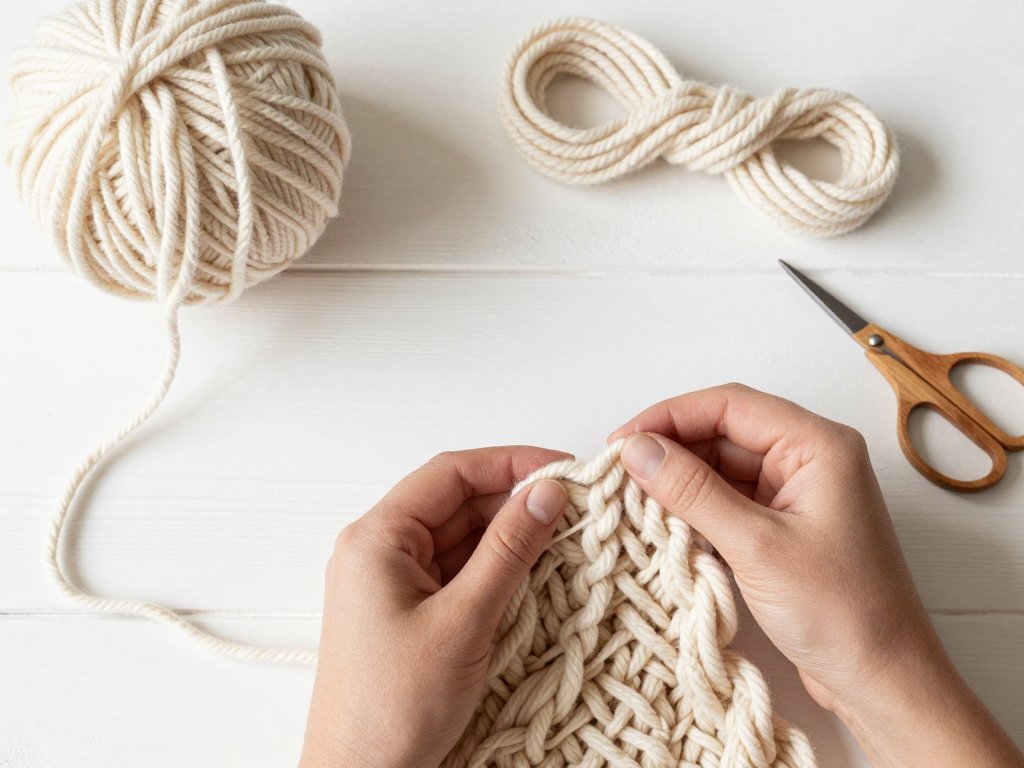
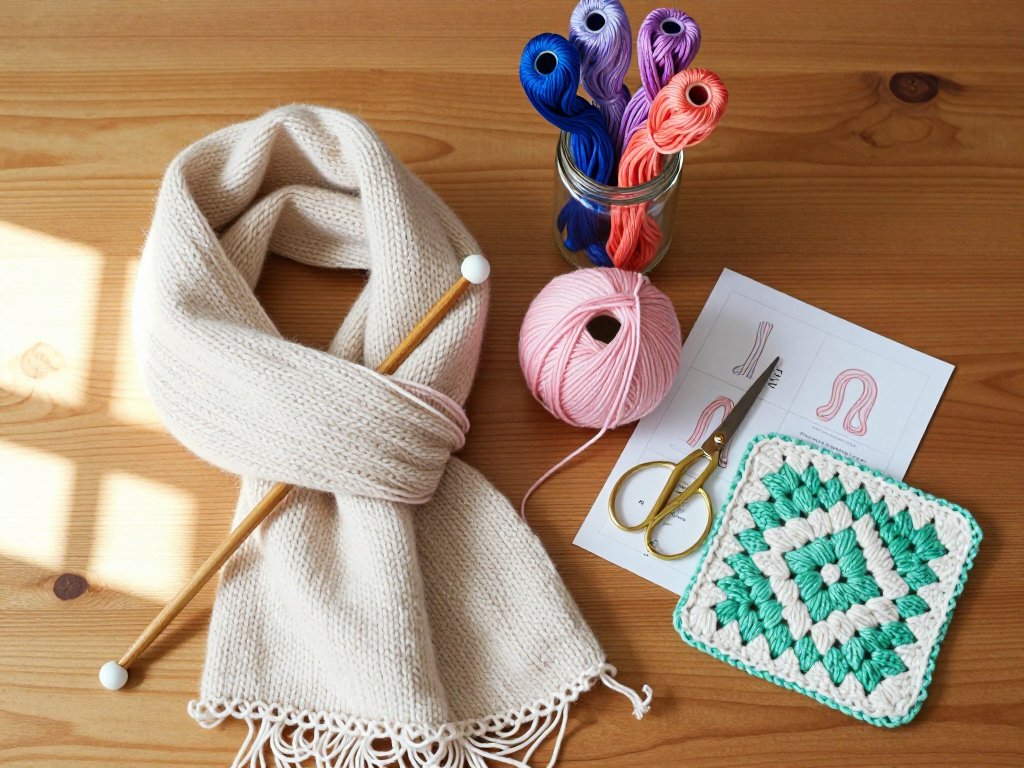
Knitting kits remain the most popular category, and for good reason. A basic knitting kit for beginners typically includes a pair of needles, a skein or two of worsted-weight yarn, and a simple pattern for a scarf, hat, or cowl.
Many kits now use chunky or super-bulky yarn, which works up quickly and gives beginners the satisfaction of visible progress in a single evening.
Look for kits that include video tutorial access—many brands now offer QR codes linking to step-by-step demonstrations for every stitch in the pattern.
This makes learning feel less lonely and more like having a friend beside you on the couch.
Crochet Kits
Crochet has surged in popularity recently, in part because it is slightly easier to learn than knitting and produces results more quickly.
A beginner crochet kit usually includes a hook, yarn, a tapestry needle for weaving in ends, and a pattern for a project like a granny square, a plushie (amigurumi), or a simple garment.
Amigurumi—the Japanese art of crocheting small stuffed animals—is particularly beloved among Gen Z makers. These tiny creatures work up in an hour or two, making them perfect for a single evening's entertainment.
Many crafters report making half a dozen amigurumi in their first week alone.
Embroidery Kits
Embroidery kits offer a different kind of satisfaction. Instead of building fabric from scratch, you decorate existing fabric with colorful thread patterns.
A typical kit includes a pre-printed fabric panel, an embroidery hoop, a selection of floss, and a needle.
Embroidery is especially well-suited to the modern crafter because it is highly portable—you can take it anywhere and work on it in short bursts.
Many Gen Z embroiderers describe it as "active relaxation," a way to feel productive while actually winding down.
The results are also highly Instagrammable, which does not hurt.
Weaving and Macramé Kits
Weaving and macramé have carved out their own niche in the fiber craft revival. A small loom weaving kit lets you create wall hangings and coasters with simple over-under patterns, while a macramé kit teaches you to tie knots that form plant hangers, wall art, and bags.
These crafts appeal to those who prefer a more structural, geometric approach to making. They also produce dramatic results quickly—a macramé plant hanger can be completed in an afternoon, giving you a finished piece that looks impressive enough to gift.
How to Choose Your First Fiber Craft Kit
If you are ready to give it a try, congratulations. You are about to discover one of life's most reliable sources of calm. Here is how to choose a kit that will set you up for success.
Start with a project you genuinely want. The best kit is one that produces something you would be excited to own or give as a gift.
If you love the idea of a chunky knit blanket, look for an arm knitting or giant needle kit.
If stuffed animals make you smile, try an amigurumi kit. Your motivation to finish depends heavily on how much you want the end result.
Read the difficulty label carefully. Most reputable kits are labeled "beginner," "intermediate," or "advanced." Ignore this at your peril.
An "advanced" crochet doily kit will frustrate a first-timer to the point of quitting. Stick with "beginner" for your first project, even if the intermediate option looks more exciting.
The confidence you gain from successfully completing a simple project will carry you much further than struggling through a complex one.
Check what is included. Not all kits are created equal. Some include only the yarn and pattern, expecting you to provide your own needles, scissors, and other tools.
Others include everything down to the stitch markers and project bag. Read the product description carefully before buying.
If you are truly starting from scratch, a "complete" kit is worth the extra cost.
Look for video support. Written patterns can be confusing for a beginner, especially when they use abbreviations like "k2tog" or "sc2tog." Kits that include access to video tutorials or a private community group are gold.
They transform a solitary learning experience into something shared. Many crafters say that watching someone else's hands perform the stitch is the only way the instruction truly clicks.
Consider the time commitment. Be honest about how much time you can realistically give to a project.
A king-size blanket may look stunning, but if you only have thirty minutes a few evenings per week, you will be working on it for months—and that can feel discouraging.
Start with something you can finish in a week or two. The boost of completing your first project will keep you motivated for the next one.
The Deeper Shift: From Consumer to Creator
What is happening with fiber craft kits is about more than just a new hobby.
It represents a fundamental shift in how a generation relates to their own time and attention.
For years, the dominant narrative around leisure time has been consumption—watch this show, browse this feed, buy this product.
The implicit message is that happiness comes from taking in the world around you. But making offers something deeper.
It positions you not as a consumer of experiences, but as the creator of them.
When you knit a scarf, you are not just making a piece of clothing. You are making a decision about how you spent your evening.
You are making a gift that carries the time and care you invested in every stitch.
You are making a small stand against the idea that your worth is measured by how much you consume.
There is a quiet dignity in that. And for a generation that came of age in a landscape of economic uncertainty, climate anxiety, and digital overwhelm, that feeling of agency is precious.
Fiber crafts also connect us to the generations who came before. When you learn to crochet, you are participating in a tradition that stretches back centuries.
The granny square you make tonight is a direct descendant of the squares your great-grandmother might have made, using the same stitches, the same rhythm of hook and yarn.
In a world that changes faster than ever, that continuity is grounding. It reminds us that some things endure—patience, skill, and the simple pleasure of making something with your hands.
Getting Started: Your First Evening with a Kit
You have chosen your kit. The box has arrived. Now what? Set aside an evening when you will not be rushed.
Light a candle, put on a podcast or some quiet music, and lay everything out on a table in good light.
Read through the pattern once from start to finish before picking up your tools. You do not need to memorize it—just get a sense of the overall shape of the project.
Then take a deep breath and make your first stitch. It will probably look awkward.
Your tension will be uneven. You may drop a stitch and have to start over.
That is completely normal. Every experienced crafter has a drawer full of lumpy first attempts.
The goal is not perfection. The goal is the process itself—the feeling of your hands learning a new rhythm, the satisfaction of watching something grow under your fingers.
If you get frustrated, put it down and come back tomorrow. The yarn will wait.
That is one of the great gifts of fiber crafts: they are patient. Unlike doomscrolling, which demands your constant attention and rewards you with anxiety, a half-finished scarf asks nothing of you.
It simply sits there, ready for whenever you are ready for it.
Conclusion
The rise of fiber craft kits among Gen Z is not a passing trend. It is a response to a genuine need—the need to slow down, to create, to feel the texture of yarn instead of the smooth glass of a phone screen.
Whether you pick up knitting needles, a crochet hook, or an embroidery hoop, you are joining a community that stretches across centuries and continents.
You are choosing to make something instead of scrolling through something. And in that simple choice, there is a surprising amount of hope.
So go ahead. Pick a kit that makes you smile. Clear an evening. And give yourself permission to make something imperfect, beautiful, and entirely your own.
The world will still be there when you look up from your stitches. But you might find that you mind it a little less than before.